Warehouse Security Camera Systems
Camera plans for warehouse aisles, receiving, shipping, employee entries, inventory zones, equipment charging areas, and high-value storage. Coverage should support operational review as well as security response.

INDUSTRIAL SECURITY SOLUTIONS
Data Pro Communications plans industrial security systems for warehouses, distribution centers, manufacturing facilities, logistics operations, industrial parks, port-adjacent properties, loading docks, outdoor yards, and critical infrastructure across the Tampa region.
Projects may combine security cameras, access control, structured cabling, fiber optics, network infrastructure, AI video analytics, license plate recognition, remote monitoring, and documented handoff so facility teams can manage visibility across large, active sites.
SERVICE OVERVIEW
Industrial security requires more than a camera list. The system has to reflect how goods, vehicles, employees, visitors, contractors, and equipment move through the property. A useful plan starts with operating areas, risk points, cable pathways, network capacity, recording requirements, and the people who will review video or manage access after installation.
Warehouses and distribution centers often need visibility at receiving, shipping, staging, dock lanes, inventory zones, truck courts, gates, and parking. Manufacturing sites may need cameras and access control around production areas, maintenance rooms, tool rooms, equipment zones, utility spaces, and controlled offices.
Data Pro Communications can coordinate security cameras with structured cabling, fiber optics, network infrastructure, access control, analytics, LPR, and remote monitoring so the system is practical for the facility team, not just technically installed.
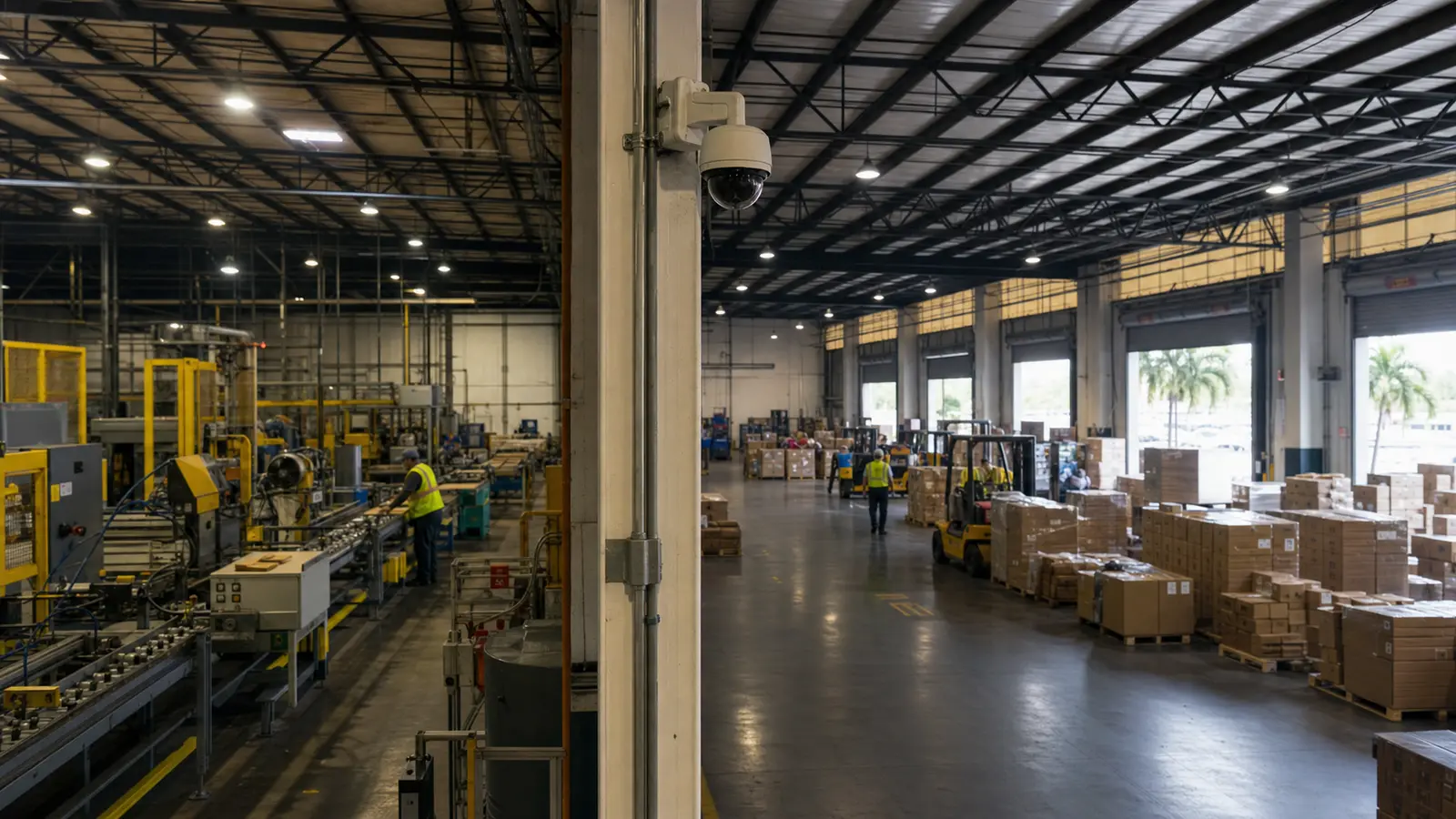
INDUSTRIAL SECURITY FOR TAMPA LOGISTICS, PORT, AND MANUFACTURING PROPERTIES
Tampa industrial security planning often has to account for port activity, interstate access, warehousing, manufacturing, logistics, and distribution operations across Tampa Bay and Hillsborough County. These properties need visibility across large footprints, not just doorways.
Facilities near Port Tampa Bay, the I-4 corridor, I-75 access, industrial parks, and last-mile distribution areas may combine truck traffic, employee shifts, outdoor storage, dock scheduling, visitor access, and critical network rooms. Camera placement, access control, cabling, fiber, and remote viewing should be coordinated before equipment is selected.
Industrial projects also need practical planning for Florida exterior conditions: heat, humidity, storms, glare, low-light yards, pole mounting, cable protection, network closet cooling, and service access for future expansion.
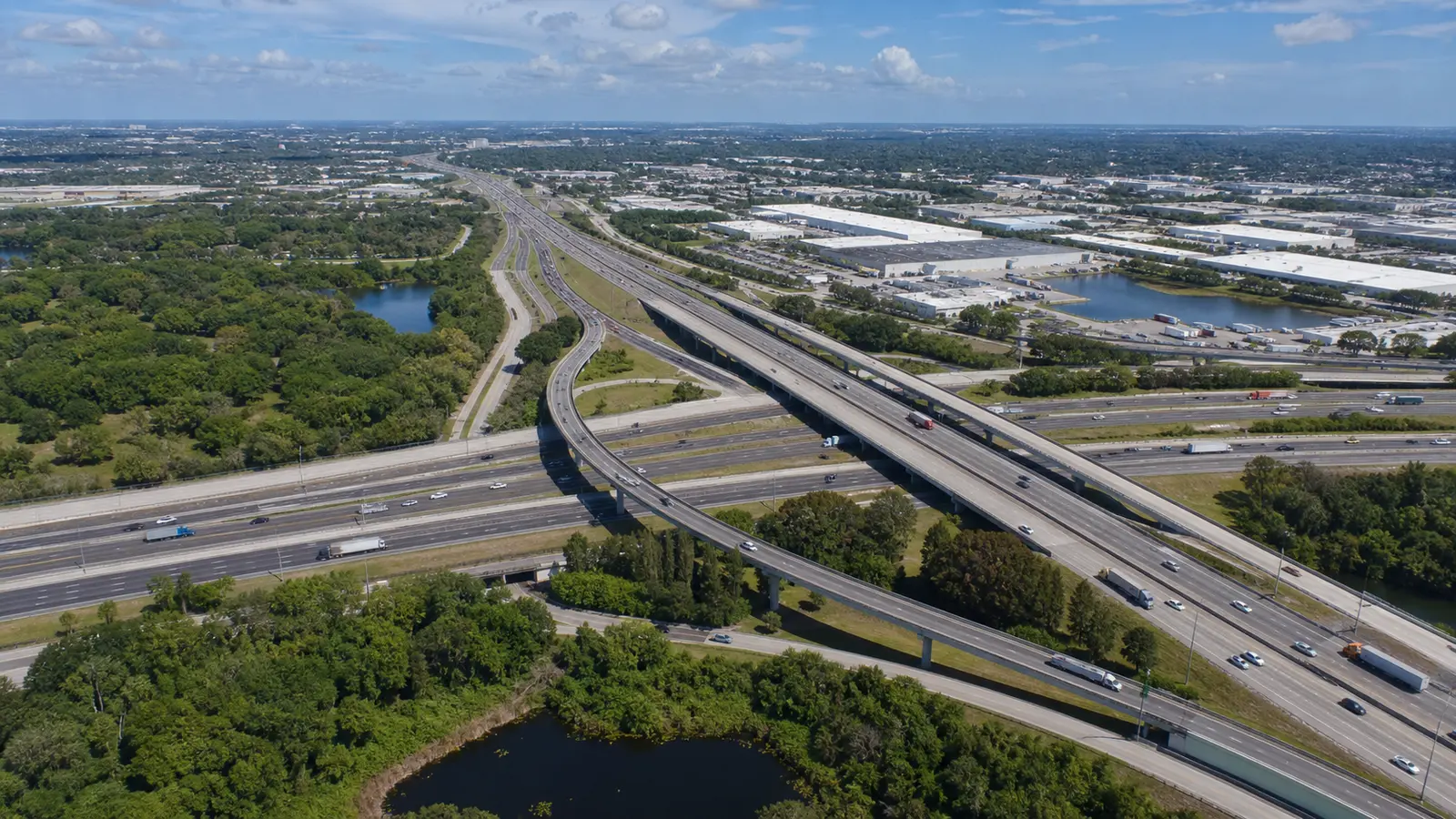
WAREHOUSES AND DISTRIBUTION CENTERS
Plan camera views around receiving, shipping, staging, high-value aisles, forklift routes, employee entries, truck courts, and trailer areas. Pair cameras with cabling and network infrastructure that can support future growth.
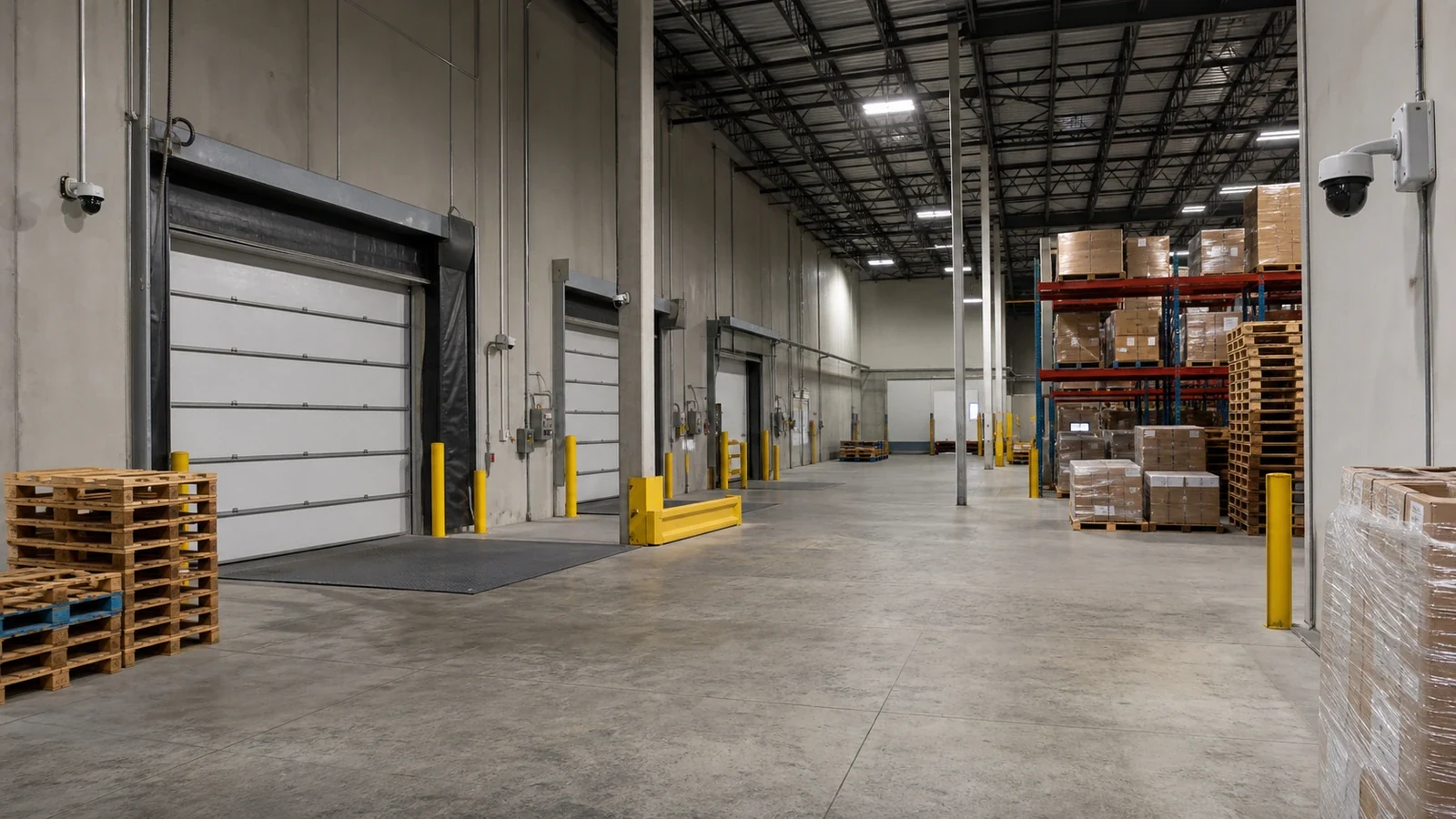
MANUFACTURING AND INDUSTRIAL PARKS
Use cameras and access control to support visibility around production lines, maintenance spaces, restricted rooms, equipment areas, visitor entries, and exterior approaches. Fiber and structured cabling may be needed between buildings or across large footprints.
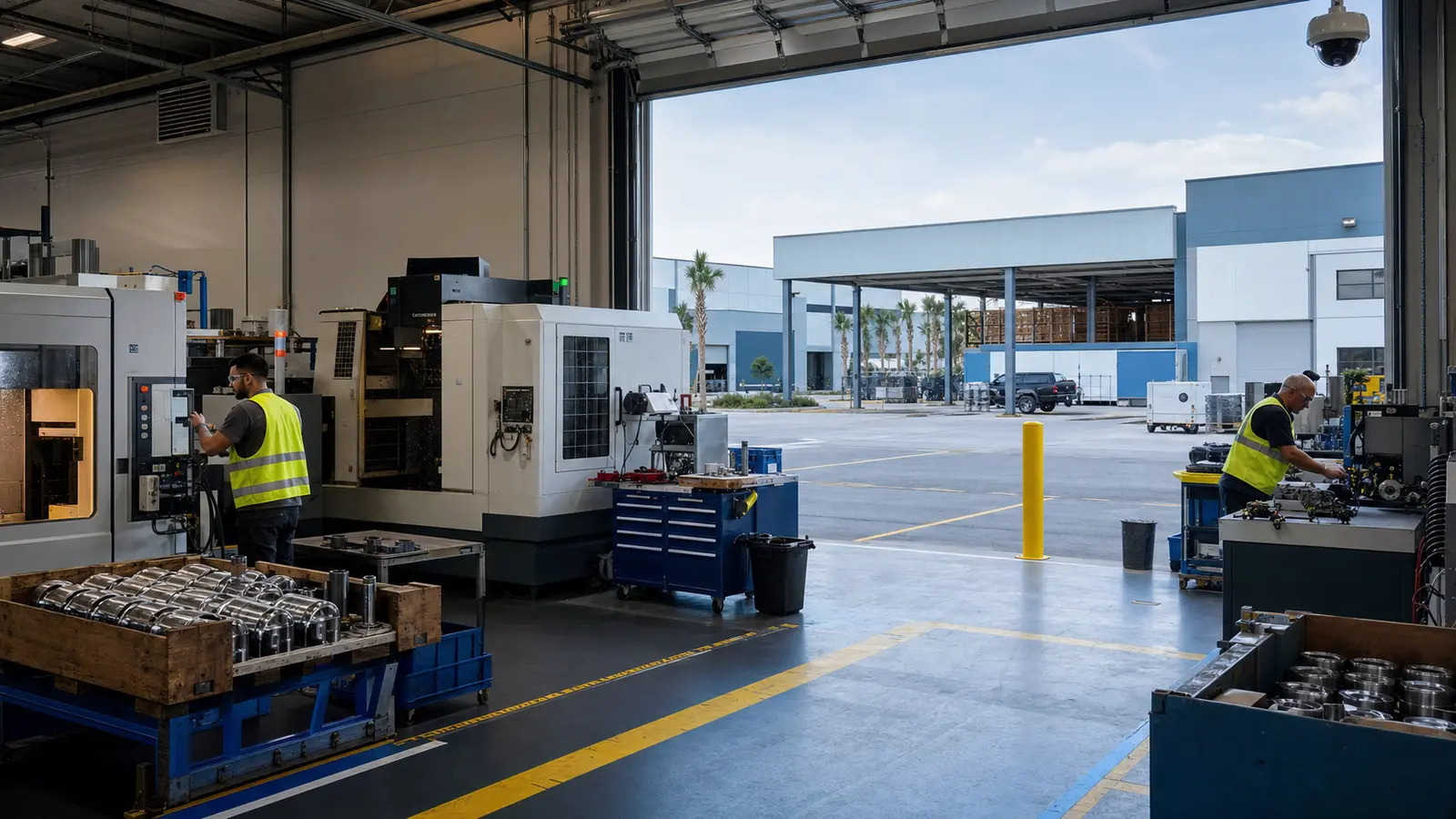
PORTS, OUTDOOR YARDS, AND CRITICAL INFRASTRUCTURE
Outdoor yards, gates, laydown areas, port-adjacent sites, utility areas, and perimeter zones need weather-rated cameras, careful mounting, lighting review, remote viewing, and secure network design.

ANALYTICS, LPR, AND REMOTE MONITORING
AI video analytics and license plate recognition can support vehicle movement, perimeter review, after-hours activity, and gate events when camera angle, lighting, lane control, and network reliability are properly planned.
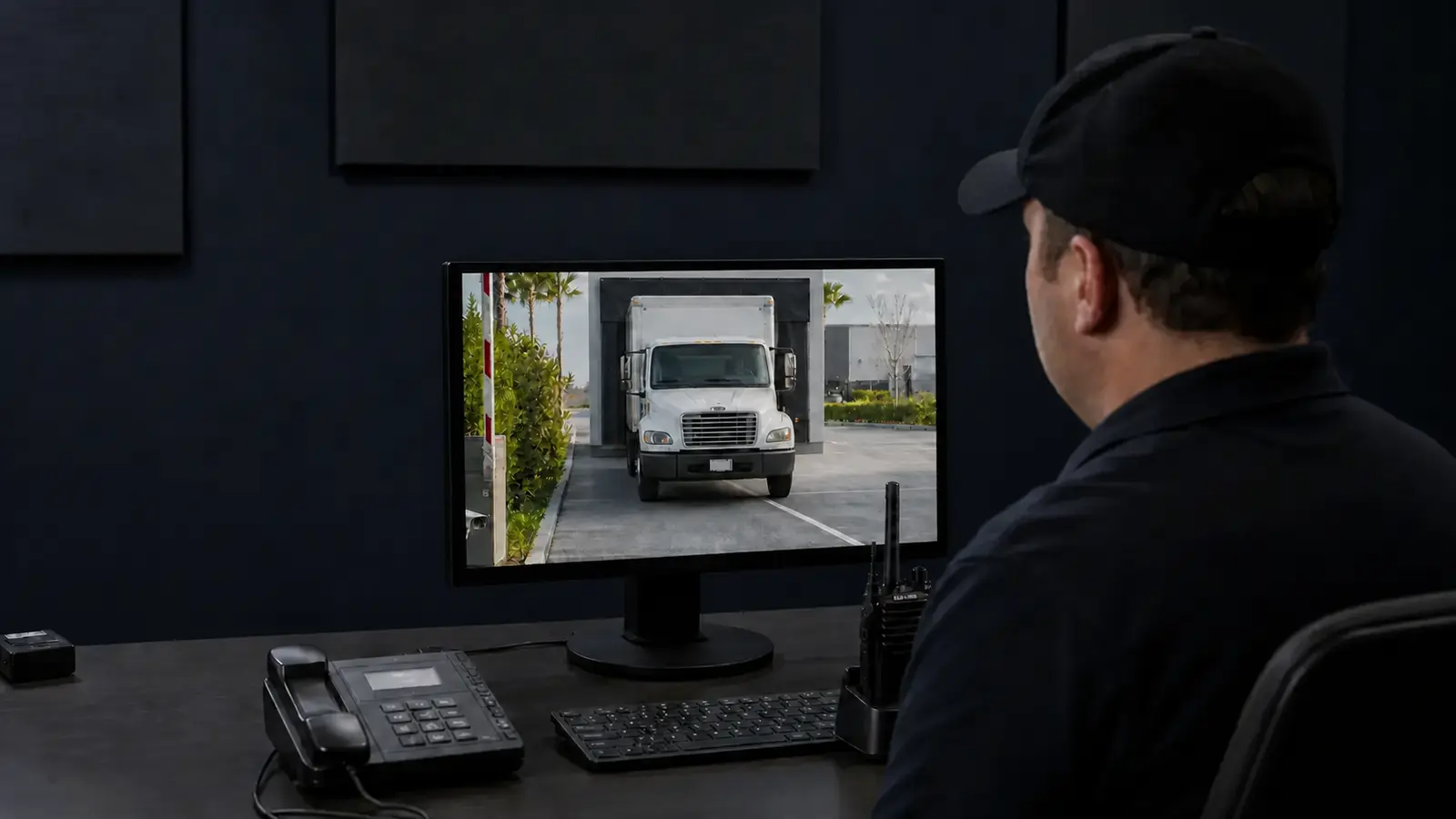
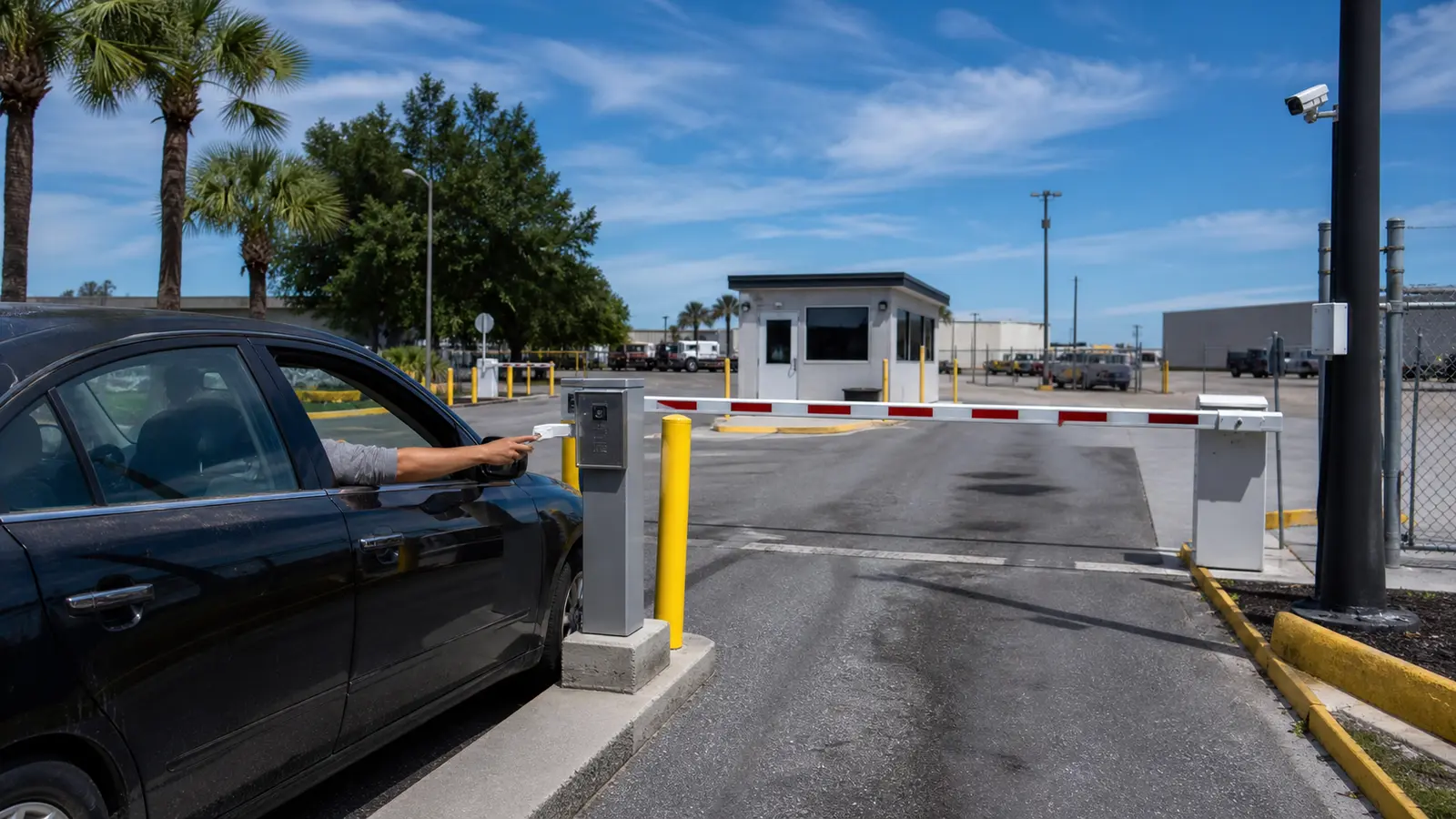
Access Control Installation helps industrial sites manage employee doors, restricted production areas, equipment rooms, network rooms, visitor access, and vehicle gates while keeping entry events easier to review alongside camera footage.
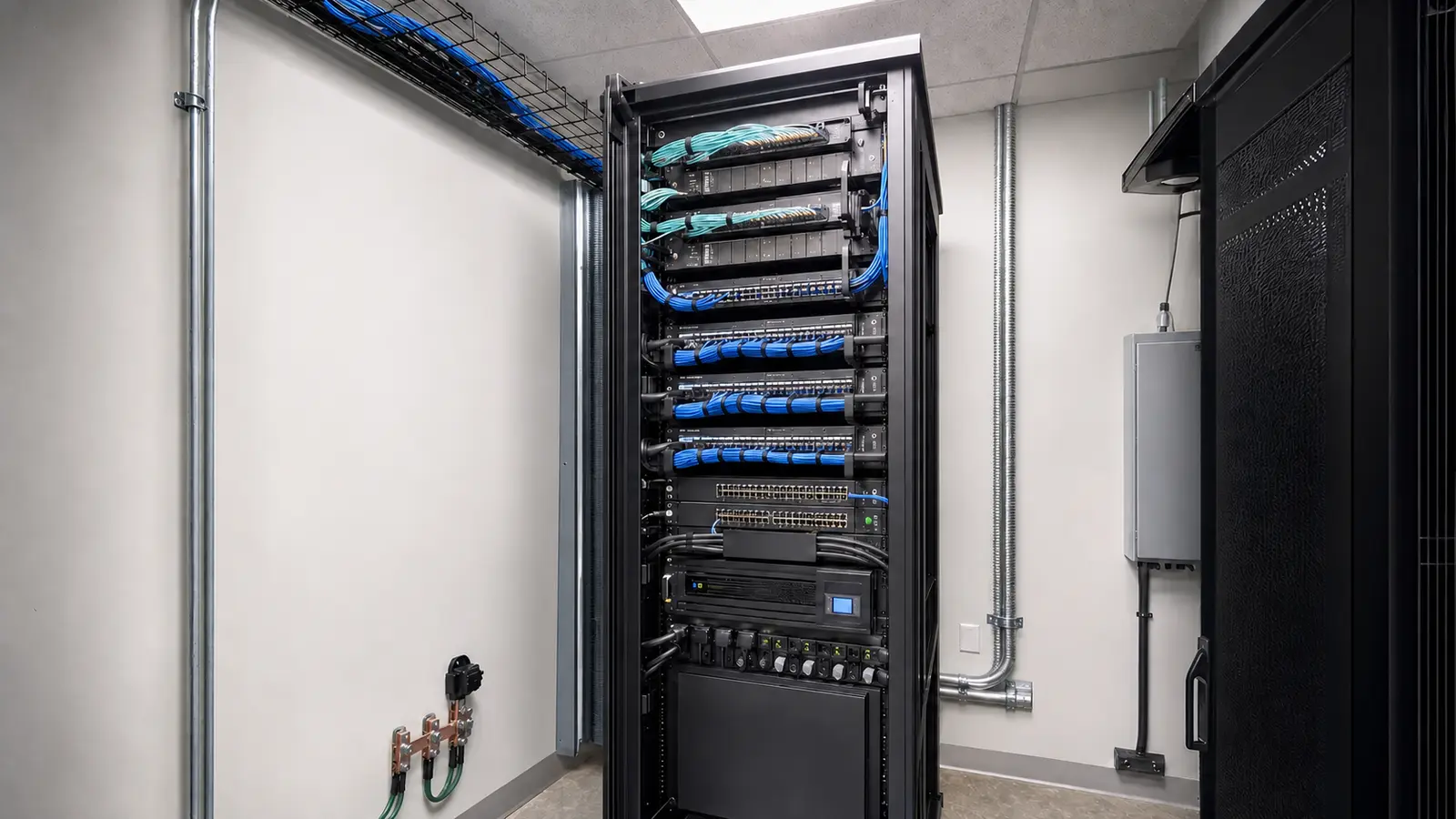
Structured Cabling supports PoE cameras, access devices, fiber extensions, switches, racks, labels, and serviceable documentation so large industrial systems can be maintained and expanded.


PROCESS
Review dock doors, truck courts, employee entrances, visitor access, production areas, network rooms, outdoor yards, gates, and current camera or access equipment.
Map camera views, access points, cable pathways, fiber needs, switch capacity, recording location, remote viewing requirements, and future expansion areas.
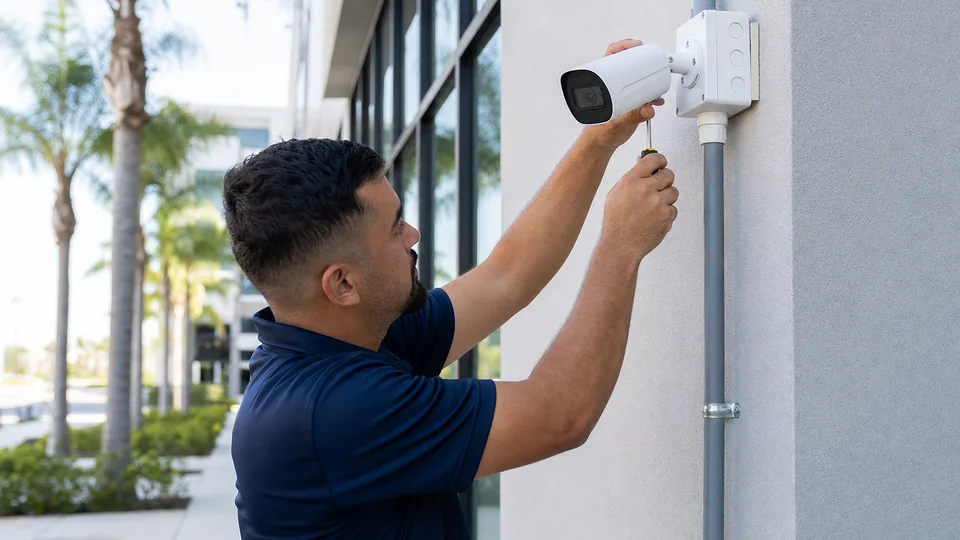
Install cameras, cabling, access devices, network hardware, recorders, analytics settings, and LPR equipment where the project scope calls for them.
Test views, recording, remote access, user permissions, alerts, and system labels so facility teams know how to operate and support the system.
FAQ
Warehouses, distribution centers, manufacturing plants, logistics facilities, industrial parks, port-adjacent sites, loading docks, outdoor yards, and critical infrastructure sites all benefit from security planning that combines cameras, access control, cabling, network readiness, and clear operating procedures.
Industrial camera systems often cover larger distances, higher mounting points, dock doors, yards, truck lanes, equipment areas, perimeter fencing, production zones, and multiple shifts. They usually require stronger infrastructure planning than a small office or retail camera system.
Common camera locations include employee entrances, visitor entries, receiving doors, shipping doors, loading docks, staging areas, high-value inventory zones, equipment charging areas, pedestrian intersections, truck courts, exterior gates, and parking areas.
Yes. Cameras can help document dock activity, trailer movement, deliveries, yard access, after-hours activity, and safety incidents. The system should be planned around sightlines, lighting, mounting height, weather exposure, and how supervisors review footage.
Access control can limit entry to employee doors, offices, equipment rooms, production areas, server rooms, gates, and restricted spaces. When coordinated with cameras, managers can review entry events with related video and maintain better accountability.
Structured cabling supports reliable camera, access control, network, and monitoring connections. Proper cable pathways, labeling, testing, rack organization, and documentation make the system easier to service, expand, and troubleshoot.
Fiber optics may be useful for long camera runs, separate buildings, remote gates, large yards, high-bandwidth backbones, or areas where copper cabling distance limits are a concern. Fiber planning should be coordinated with network equipment and power availability.
IP camera systems may need PoE switching, VLAN planning, bandwidth review, recorder or VMS placement, secure remote access, user permissions, UPS backup, and documented ports and cable labels. The network should be planned before large camera counts are added.
AI video analytics may help flag motion in restricted areas, vehicles entering a lane, people near a perimeter, line crossing, loitering, or activity after hours. Analytics should be configured carefully so alerts support operations instead of creating noise.
License plate recognition can be useful at controlled vehicle entries, truck gates, parking entrances, fleet yards, and distribution facilities where vehicle records matter. It requires careful camera angle, lighting, lane control, distance, and recording planning.
Remote monitoring can be included when the site needs off-site visibility for managers, facility teams, or authorized users. Remote access should be secured with appropriate user permissions, reliable connectivity, and clear rules for who can view or export footage.
Outdoor cameras should account for heat, humidity, storms, wind-driven rain, glare, low-light areas, salt air near coastal or port settings, insects, vegetation, pole movement, and secure mounting. Weather-rated equipment and proper cable protection matter.
Sometimes. Existing cameras, recorders, cable, switches, racks, and power supplies should be inspected for condition, compatibility, labeling, bandwidth, resolution needs, and serviceability before reuse is recommended.
Useful details include property type, square footage, shifts, dock count, gate locations, current camera count, recorder or VMS type, network closet locations, outdoor areas, pain points, access control needs, remote viewing needs, and planned expansion.
Data Pro Communications reviews the property goals, existing system details, infrastructure conditions, and operating needs so the project can be scoped around camera coverage, access control, cabling, network readiness, remote viewing, and long-term support.