Healthcare Camera Coverage: What This Guide Covers
For healthcare properties, this guidance helps facility, security and IT teams decide where cameras can support public-area awareness, staff-only access review, restricted-door activity and parking coverage while facility privacy, access and security policies remain separately governed.
Healthcare Camera Coverage: How the System Works
Healthcare Camera Coverage: Core Components
Hospital camera systems combine public-area overview cameras, targeted entrance views, parking coverage, controlled-door cameras, recorder or VMS storage, role-based viewing permissions and documented camera naming. Privacy-sensitive zones, clinical workflows, IT rooms and staff-only spaces require placement decisions that are different from ordinary commercial corridors.
Healthcare Camera Coverage: Operational Flow
The planning process starts with stakeholder review, then separates public, staff-only, restricted and privacy-sensitive areas. Camera views are matched to each zone, permissions are assigned by role, and the finished system is tested so authorized users know which cameras support entrances, parking, controlled doors and incident review.
Healthcare Camera Coverage: Planning Criteria
- Coverage purposeDefines what the view must prove after an incident.
- Distance and detailConnects lens, resolution and mounting to usable footage.
- Lighting and scheduleConfirms daytime, nighttime and after-hours performance.
- Power and pathwayDetermines whether wired, wireless, solar or temporary infrastructure is realistic.
- User workflowClarifies who reviews video, exports clips and receives alerts.
Healthcare Camera Coverage: Commercial Examples
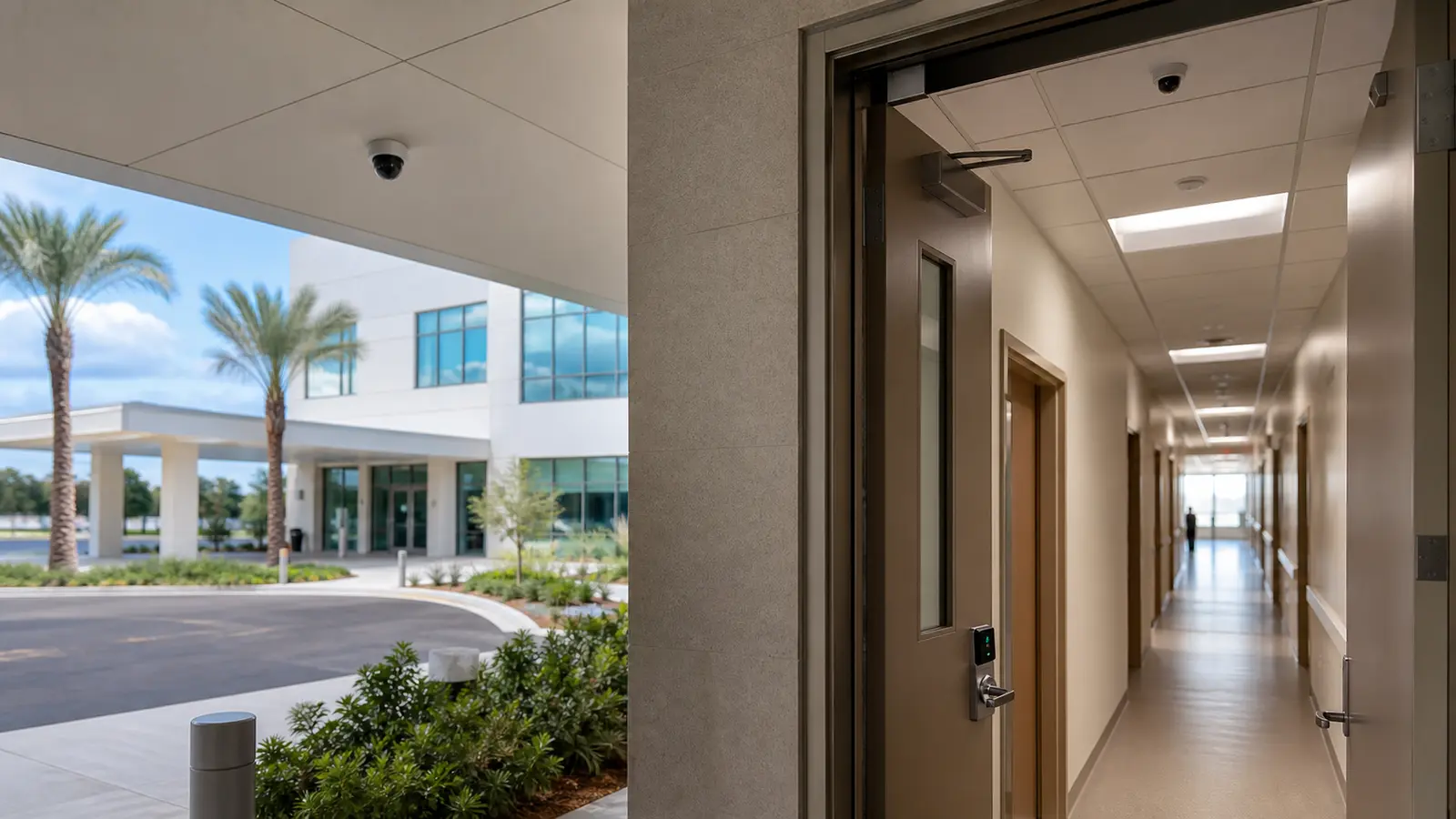
Example: A hospital outpatient entrance may need wide lobby awareness plus tighter views at controlled doors.
Example: A medical office building may need parking, elevator lobby and after-hours entry coverage without treating every tenant suite the same.
Example: A specialty clinic may need staff-only corridor and medication-room approach views coordinated with access permissions.
Healthcare Camera Coverage: Operational Recommendations
Recommendation: Separate public, staff-only and restricted clinical support zones before selecting camera locations.
Recommendation: Coordinate camera viewing permissions with facility leadership, IT and security procedures.
Healthcare Camera Coverage: Advantages and Limitations
Healthcare Camera Coverage: Advantages
Advantage: Supports incident review across entrances, parking, waiting areas and controlled corridors.
Advantage: Helps security teams see movement patterns around after-hours doors and service access.
Advantage: Can integrate with access control where doors, visitor policies and investigations intersect.
Healthcare Camera Coverage: Limitations
Limitation: Cameras should not be positioned as a substitute for clinical privacy policy, staff procedure or access control.
Limitation: Sensitive care areas may require exclusion, masking or different operational handling.
Limitation: Healthcare environments can have restricted ceiling access, infection-control work rules and after-hours scheduling constraints.
Healthcare Camera Coverage: Common Mistakes
Common mistake: placing cameras before defining privacy-sensitive zones
Common mistake: assuming lobby coverage also identifies every person at a distant door
Common mistake: giving too many users broad viewing permissions
Common mistake: ignoring IT approval for network, storage and remote access
Healthcare Camera Coverage: Infrastructure Dependencies
- Cabling or communicationsConfirm pathway, distance, labeling and serviceability before installation.
- PowerVerify PoE, local power, battery, solar or UPS requirements.
- Network and securityCoordinate IP addressing, VLANs, firewall policy, remote access and user roles with IT.
- StorageMatch retention, resolution, frame rate and recording behavior to the review goal.
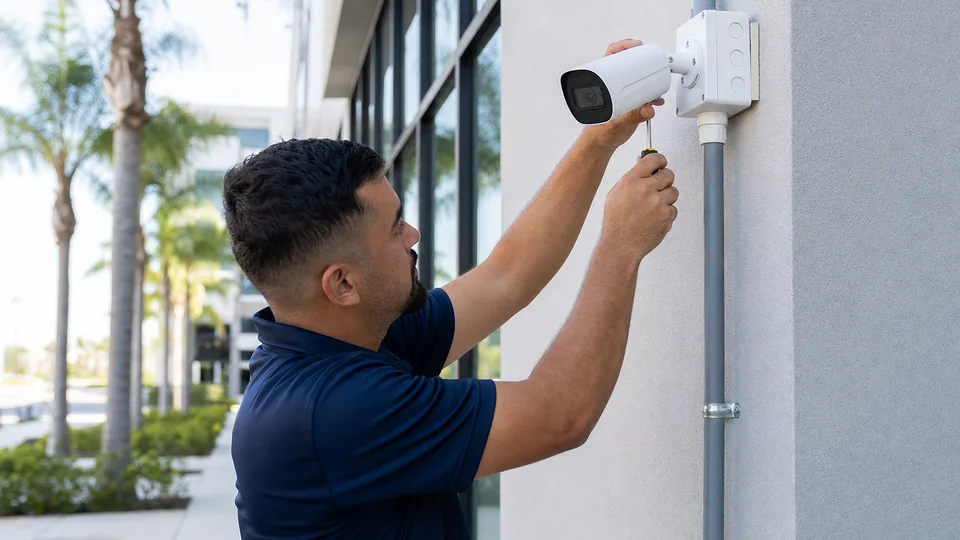
- Mounting and environmentConfirm height, weather exposure, tamper risk and maintenance access.
Healthcare Camera Coverage: Decision Checklist
[ ] Identify public entrances, waiting areas, parking, staff-only corridors and restricted support spaces.
[ ] Confirm which privacy-sensitive areas should be excluded, masked or handled with special review rules.
[ ] Decide which teams can view live video, search recordings or export clips.
[ ] Coordinate network, recorder, access-control and retention needs with facility and IT leadership.
[ ] Confirm camera names, door references and user guidance before turnover.
[ ] Confirm next action, schedule needs and responsible reviewers before project kickoff.
Healthcare Camera Coverage: When to Request a Site Review
Request a site review when a healthcare property needs cameras around public entrances, parking, controlled doors, IT rooms, medication-room approaches, outpatient areas or staff-only zones, especially when privacy-sensitive areas and user permissions must be mapped before installation.