Commercial Security Camera Planning

Solar Camera Systems for Commercial Sites

A solar camera system is useful when a commercial site needs video in an area without convenient power or network service, but it must be sized around camera load, recording method, battery reserve, solar exposure, mounting and communications. The panel and battery matter as much as the camera.

For yards, gates, construction areas, utility corridors and temporary operations near Tampa, solar cameras should be planned as small power and communications systems, not just cameras with panels attached.

Commercial-First PlanningCamera decisions are matched to property operations, review goals and the people responsible for using the system.
Coverage Before EquipmentThe project starts with what each view must prove, not with a generic camera count.
Infrastructure-Aware DesignPower, cabling, network, storage and mounting constraints are reviewed before installation work begins.
Practical User WorkflowPermissions, remote viewing, alerts and review responsibilities are considered before turnover.
Documented System DeliveryFinal delivery includes testing, camera labeling, user guidance and system documentation so the team can operate and support the system.

REMOTE SITE CAMERA POWER

Solar Camera Planning for Remote Commercial Sites

A solar camera project should begin with a power budget. The plan should account for camera draw, infrared or white-light use, modem or radio draw, recording behavior, battery reserve, panel orientation and maintenance access.

Data Pro Communications helps commercial teams evaluate whether a solar camera system is appropriate for a remote gate, construction entrance, yard, perimeter point or temporary site where power and communications are constrained.

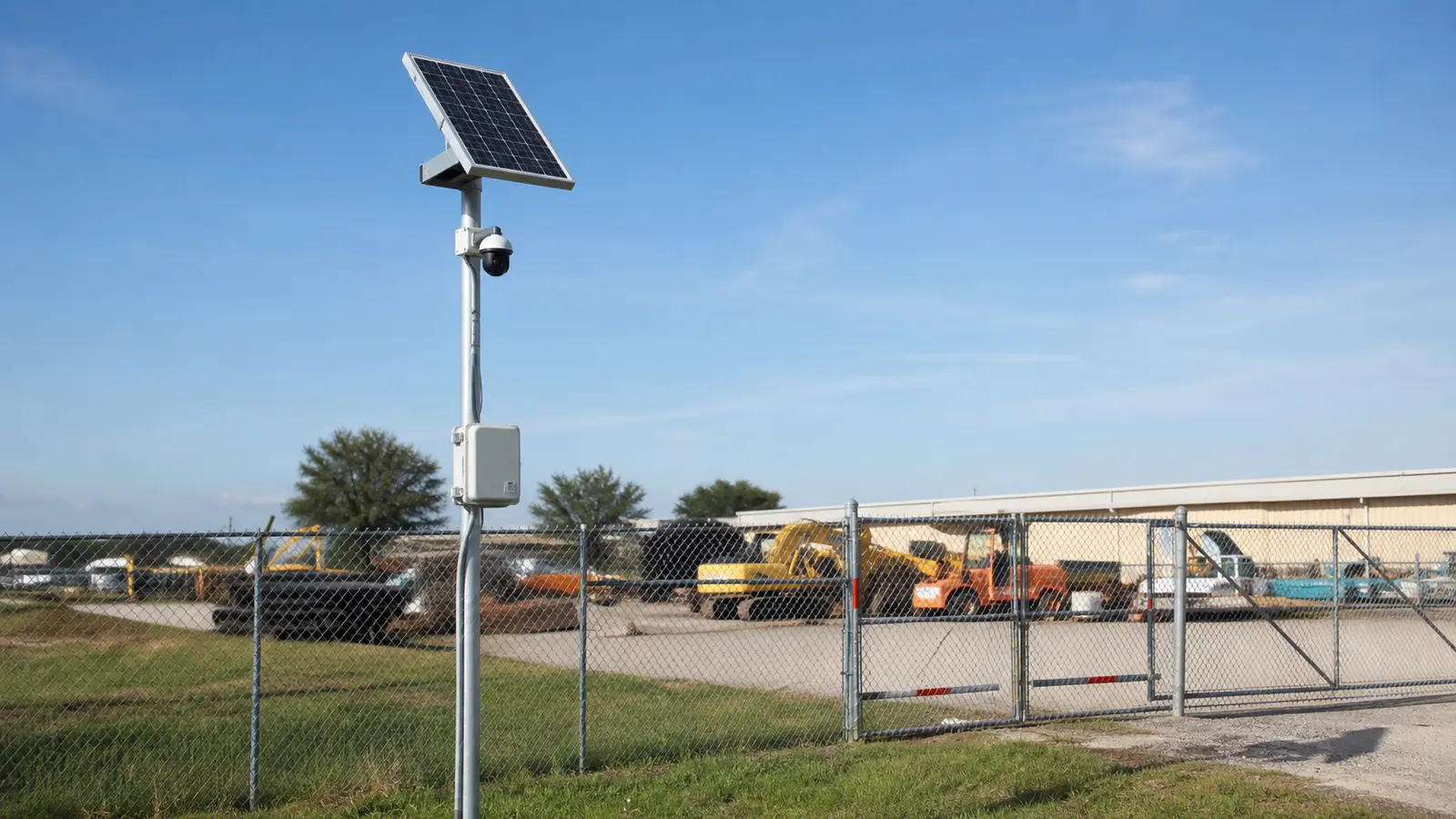
Standalone solar-powered camera protecting a remote commercial yard

PLANNING GUIDE

Solar Camera System Planning Priorities

Solar Camera Coverage and Load Requirements

Map the views that must answer real operational questions before selecting cameras.

Solar Power and Battery Review

Confirm panel exposure, battery reserve, communications and maintenance access at the exact location.

Camera Quality Within the Solar Power Budget

Match lens, lighting, resolution and distance to the detail needed after an event.

Remote Connectivity and Authorized Viewing

Plan who can view, export, administer and receive alerts from the system.

Solar Camera Performance Validation

Verify camera names, views, recording, remote access and documentation before launch.

Battery Reserve and Maintenance Planning

Leave the system organized so additional cameras, analytics or sites can be added cleanly.

Tampa-area sites can have useful sun exposure, but tree cover, storm season, vandal-resistant mounting, temporary fencing and cellular signal quality can decide whether a solar camera performs consistently.

Remote yards, construction entrances, gates and temporary sites near Tampa may need camera coverage before permanent power or network service is available. Solar planning has to account for shade, storm exposure, cellular signal, battery reserve, panel placement, tamper-resistant mounting and maintenance access at the exact location.

Solar Camera Systems Detailed Planning Guide

Solar Camera Systems: What This Guide Covers

This guidance helps site teams decide whether solar power, battery storage and cellular or wireless communications can realistically support the camera coverage they need at a remote or temporary location.

Solar Camera Systems: How the System Works

Solar Camera Systems: Core Components

A solar camera system includes the camera, solar panel, charge controller, battery, enclosure, pole or mount, cellular or wireless communications, recording method and monitoring workflow. The power budget, panel exposure and battery reserve determine whether the system can support the intended recording behavior.

Solar Camera Systems: Operational Flow

The system collects solar energy, stores it in a battery and powers the camera and communications equipment. Performance depends on load, sun exposure, shade, weather, cellular signal, recording schedule and whether the equipment can be inspected and maintained safely.

Solar Camera Systems: Planning Criteria

  • Coverage purposeDefines what the view must prove after an incident.
  • Distance and detailConnects lens, resolution and mounting to usable footage.
  • Lighting and scheduleConfirms daytime, nighttime and after-hours performance.
  • Power and pathwayDetermines whether wired, wireless, solar or temporary infrastructure is realistic.
  • User workflowClarifies who reviews video, exports clips and receives alerts.

Solar Camera Systems: Commercial Examples

Example: A construction entrance may use a solar camera during site mobilization before permanent power is active.

Example: A remote storage yard may use solar power where trenching would be disruptive or costly.

Example: A utility or gate location may need a solar camera with cellular backhaul and battery reserve for cloudy periods.

Solar Camera Systems: Operational Recommendations

Recommendation: Estimate camera, radio and accessory load before choosing the panel and battery.

Recommendation: Check solar exposure, cellular signal and mounting security at the exact camera location.

Solar Camera Systems: Advantages and Limitations

Solar Camera Systems: Advantages

Advantage: Can provide video where wired power is not practical.

Advantage: Can support temporary or phased work before permanent infrastructure is ready.

Advantage: Can reduce trenching needs for remote gates, yards and perimeter points.

Solar Camera Systems: Limitations

Limitation: Performance depends on sunlight, battery reserve, load, weather and maintenance.

Limitation: Continuous recording and high-bandwidth streaming may exceed realistic solar or cellular capacity.

Limitation: Solar equipment needs secure mounting and inspection access.

Solar Camera Systems: Common Mistakes

Common mistake: sizing the panel without calculating actual load

Common mistake: mounting under shade or near future obstructions

Common mistake: assuming cellular signal will be reliable without testing

Common mistake: using solar for a site that really needs permanent infrastructure

Solar Camera Systems: Infrastructure Dependencies

  • Cabling or communicationsConfirm pathway, distance, labeling and serviceability before installation.
  • PowerVerify PoE, local power, battery, solar or UPS requirements.
  • Network and securityCoordinate IP addressing, VLANs, firewall policy, remote access and user roles with IT.
  • StorageMatch retention, resolution, frame rate and recording behavior to the review goal.
  • Mounting and environmentConfirm height, weather exposure, tamper risk and maintenance access.

Solar Camera Systems: Decision Checklist

[ ] Calculate camera, modem, lighting and accessory load before choosing panel or battery size.

[ ] Verify sun exposure, shade patterns, storm exposure and mounting security at the exact location.

[ ] Test cellular or wireless connectivity where the camera will be installed.

[ ] Decide whether recording should be continuous, event-based or scheduled.

[ ] Plan battery reserve, maintenance access and performance monitoring before deployment.

[ ] Confirm next action, schedule needs and responsible reviewers before project kickoff.

Solar Camera Systems: When to Request a Site Review

Request a site review when a remote yard, construction entrance, gate, temporary lot or perimeter point needs video but power, shade, storm exposure, cellular signal, battery reserve or maintenance access is uncertain.
PROCESS

Solar Camera Systems Project Process

Calculate camera, communications and accessory load for the intended recording behavior

A load calculation covers the camera, recorder or edge storage, modem, radio, heater, and other accessories under the intended recording schedule.

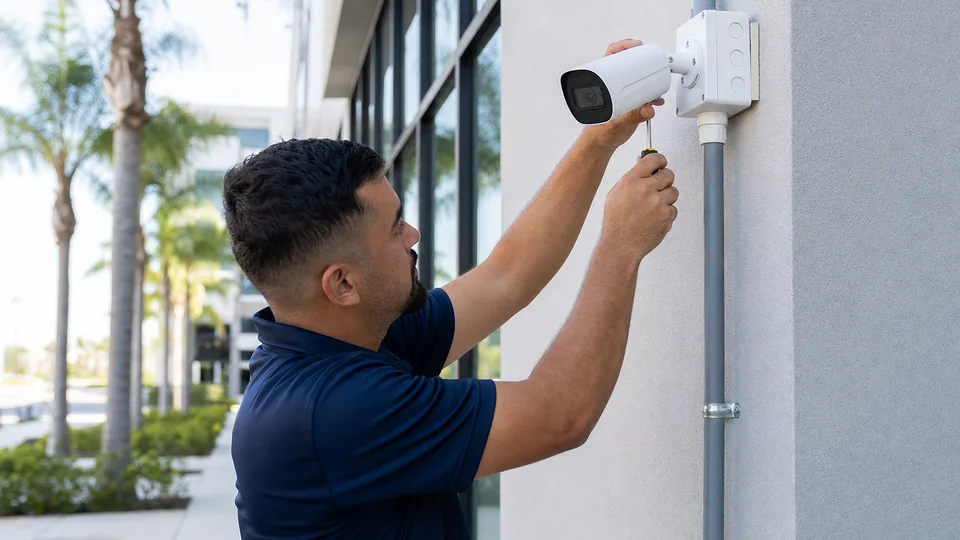
Verify sun exposure, shade, mounting security and cellular or wireless connectivity on site

On-site measurements verify solar exposure, seasonal shade, secure mounting, weather exposure, and the available cellular or wireless path.

Size Solar Power, Battery Reserve, and Communications

Size panel, battery, enclosure, recording and communications equipment around the load and reserve target.

Install, test, monitor performance and document maintenance requirements

Commissioning records charging, connectivity, video, storage, alerts, and maintenance requirements over a representative operating period.

FAQ

Solar Camera Systems FAQs

What is a solar camera system?

It is a security camera setup powered by a solar panel and battery, often paired with cellular or wireless communications for locations without convenient power.

Where are solar cameras useful?

They can help at remote gates, yards, construction entrances, temporary lots, utility areas and locations where trenching power is not practical.

Do solar cameras record continuously?

Some can, but continuous recording increases power, battery and storage needs. Many projects use event-based recording or lower-bandwidth settings.

What affects solar camera runtime?

Runtime depends on camera load, battery capacity, panel size, sun exposure, weather, modem use, recording behavior and maintenance.

Can a solar camera use Wi-Fi?

It can if reliable Wi-Fi reaches the camera location, but many remote sites require cellular or point-to-point wireless instead.

What should be checked before installing?

Check sun exposure, shade, mounting security, cellular signal, camera load, battery reserve, panel orientation and how the equipment will be serviced.

Are solar cameras good for permanent sites?

They can be, but permanent power and network infrastructure may be better when available and when continuous recording or high bandwidth is required.

Can solar cameras support night vision?

Yes, but infrared or white-light use increases power demand and should be included in the load calculation.

What are common solar camera mistakes?

Common mistakes include undersized batteries, shaded panels, weak cellular signal, exposed mounting and unrealistic streaming expectations.

When should a site review be requested for a solar camera system?

Request a site review before using solar cameras where power, shade, cellular signal, recording duration or vandal-resistant mounting are uncertain.

NEXT STEP

Plan a Solar Camera System for a Remote Site

If the property needs practical camera planning, site-specific infrastructure review or a clear path from question to implementation, request a commercial site survey.

Request a Site Survey