AI Video Analytics: What This Guide Covers
This guidance helps property teams understand where AI analytics can support event filtering, after-hours monitoring and faster review, while still requiring camera placement, rule design, testing and human response procedures.
AI Video Analytics: How the System Works
AI-Enabled Security Cameras: Core Components
AI camera systems depend on analytic-capable cameras or software, a view designed for the target event, rule zones, schedules, object classifications, recording, alert delivery and a response workflow. The camera angle, lighting, motion paths and exclusions are part of the analytic design, not afterthoughts.
AI-Enabled Security Cameras: Operational Flow
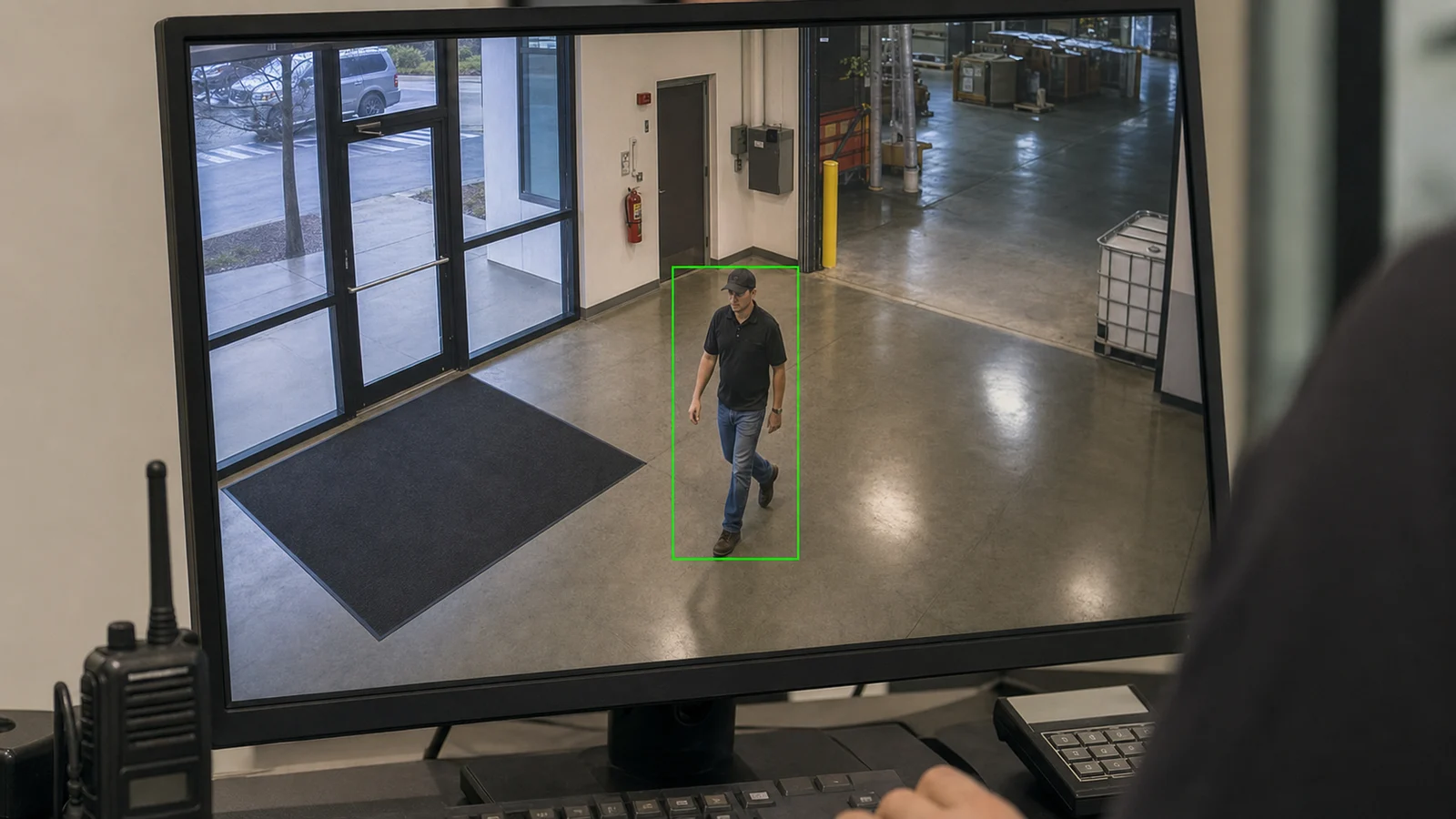
AI analytics compare activity in a defined scene against configured rules, such as a person entering a zone after hours or a vehicle crossing a line. Alerts are useful only when the scene is stable, rules are tuned, false-alert sources are tested and authorized users know how to respond.
AI Video Analytics: Planning Criteria
- Coverage purposeDefines what the view must prove after an incident.
- Distance and detailConnects lens, resolution and mounting to usable footage.
- Lighting and scheduleConfirms daytime, nighttime and after-hours performance.
- Power and pathwayDetermines whether wired, wireless, solar or temporary infrastructure is realistic.
- User workflowClarifies who reviews video, exports clips and receives alerts.
AI Video Analytics: Commercial Examples
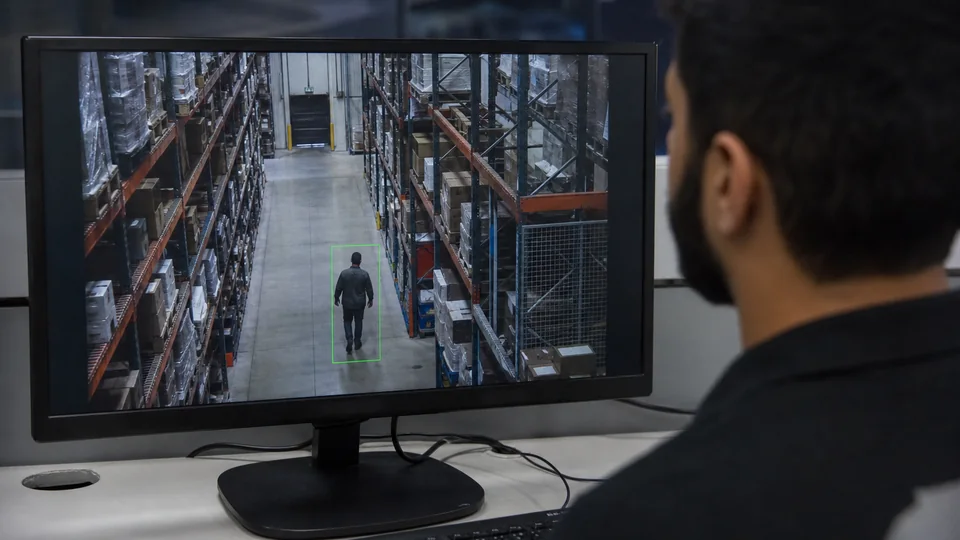
Example: A warehouse can use person or vehicle classification to reduce nuisance motion alerts from rain or shadows.
Example: A parking area can use zone-based analytics to flag movement after closing while fixed cameras keep evidence views.
Example: An office building can use after-hours rules around entrances and restricted corridors rather than broad all-day alerting.
AI Video Analytics: Operational Recommendations
Recommendation: Define the event that should trigger review before selecting an AI camera or license.
Recommendation: Test analytics under day, night, rain, shadow and busy-scene conditions before relying on alerts.
AI Video Analytics: Advantages and Limitations
AI Video Analytics: Advantages
Advantage: Can reduce review time by filtering events by object, zone or schedule.
Advantage: Can support faster awareness when a defined event occurs after hours.
Advantage: Can help search recorded video by people, vehicles or motion categories when supported by the platform.
AI Video Analytics: Limitations
Limitation: Analytics can miss events or create false alerts when lighting, angle or scene complexity changes.
Limitation: AI results require policy, permissions and human review; they are not proof by themselves.
Limitation: Some features depend on camera model, recorder, VMS licensing and firmware support.
AI Video Analytics: Common Mistakes
Common mistake: buying AI features without defining alert rules
Common mistake: expecting one camera to classify everything in a wide scene
Common mistake: ignoring privacy and user-permission settings
Common mistake: failing to retest analytics after lighting or layout changes
AI Video Analytics: Infrastructure Dependencies
- Cabling or communicationsConfirm pathway, distance, labeling and serviceability before installation.
- PowerVerify PoE, local power, battery, solar or UPS requirements.
- Network and securityCoordinate IP addressing, VLANs, firewall policy, remote access and user roles with IT.
- StorageMatch retention, resolution, frame rate and recording behavior to the review goal.
- Mounting and environmentConfirm height, weather exposure, tamper risk and maintenance access.
AI Video Analytics: Decision Checklist
[ ] Define the exact event the AI rule should detect, such as vehicle entry, person presence or line crossing.
[ ] Confirm the camera view is narrow enough and well lit enough for the analytic objective.
[ ] Set schedules, exclusion zones and notification rules before launch.
[ ] Test day, night, rain, shadow and busy-scene conditions for false alerts.
[ ] Document who receives alerts, who reviews video and how rules will be tuned over time.
[ ] Confirm next action, schedule needs and responsible reviewers before project kickoff.
AI Video Analytics: When to Request a Site Review
Request a site review when a property needs AI rules for logistics yards, parking lots, office entrances, warehouses, after-hours movement, perimeter alerts or false-alert reduction, especially when alert response and user responsibilities are not yet defined.