Tampa Commercial Camera Planning

How Far Can Security Cameras See?

A security camera can see as far as the lens and sensor allow, but it may not show useful detail at that full distance. For a commercial property, the better question is whether the camera can detect, observe, recognize or identify a person, vehicle or event at the required location.

For Tampa commercial sites, distance planning is most important at parking entries, gates, docks, long corridors, garage ramps and exterior approaches where a camera may see activity but not capture enough detail to answer the real question.

Commercial-First PlanningCamera recommendations are shaped around business, property-management and facility workflows.
Connected Low-Voltage PlanningCameras, cabling, network equipment, access control and recording are considered together.
Florida Licensed ContractorElectrical contractor license identifier: EC13016138.
Tampa Bay Property ContextPlanning accounts for offices, retail, hospitality, warehouses, multifamily, HOAs and managed properties.
Documented System DeliveryThe final system should include clear labeling, tested camera views, user guidance and system documentation that authorized teams can understand.

CAMERA DISTANCE PLANNING

Planning Camera Distance for Detection and Identification

Camera distance should be judged by the review outcome: detecting activity, observing behavior, recognizing a vehicle or identifying a person at a specific point on the property.

The practical goal is to help owners, managers, construction partners and facility teams make better decisions before equipment is selected, installed or expanded.

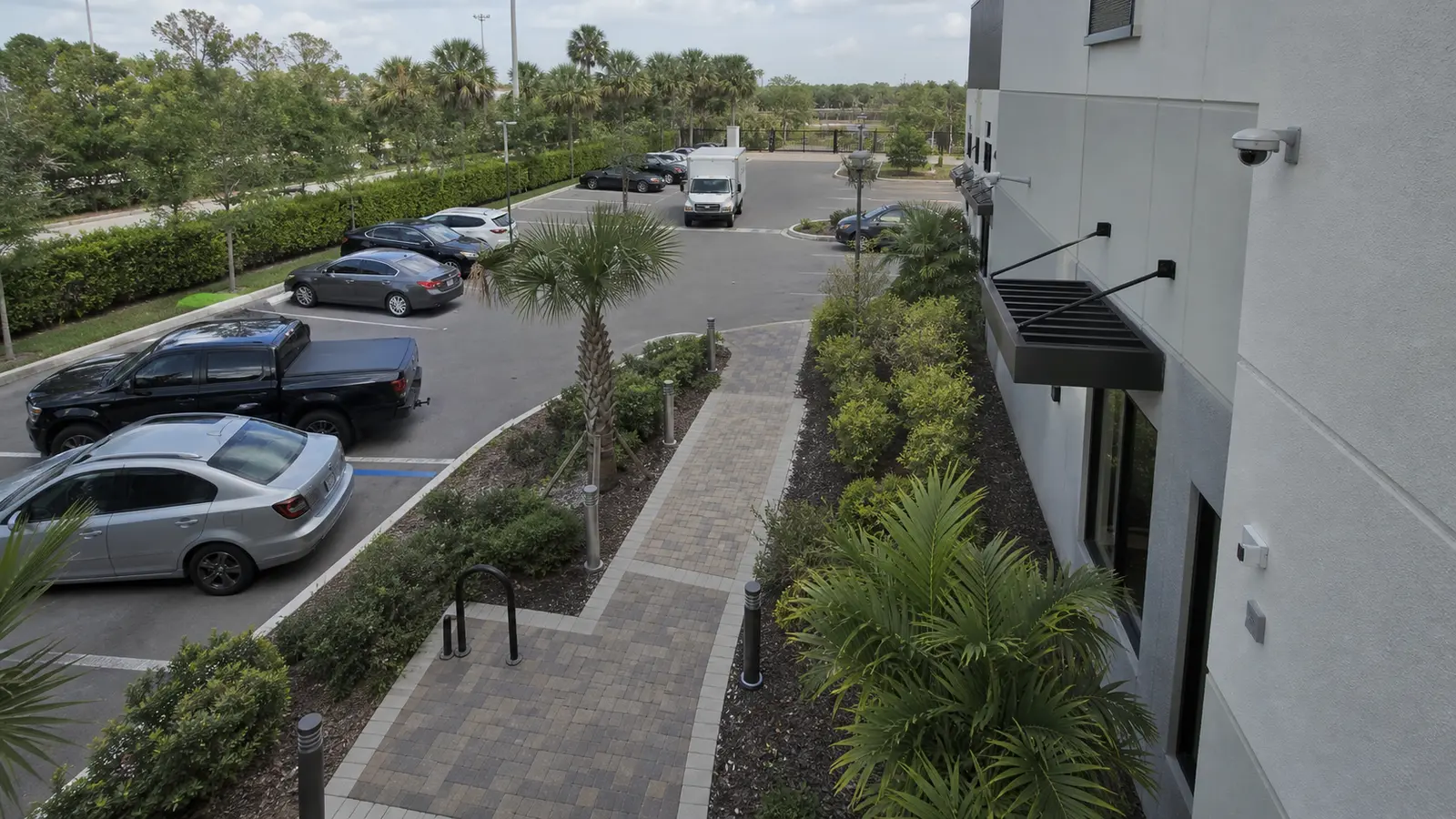
Commercial parking approach divided into realistic detection and identification distances

PLANNING GUIDE

Security Camera Range Factors

Security Camera Viewing Distance: Planning

Define the coverage purpose, review goals and property constraints before choosing devices.

Security Camera Viewing Distance: Infrastructure Requirements

Confirm cabling, PoE, network, rack, UPS and storage requirements before installation.

Security Camera Viewing Distance: Configuration Requirements

Tune views, permissions, retention and alerts around how authorized users will review video.

Security Camera Viewing Distance: Lifecycle Planning

Document the system so future service, expansion and troubleshooting do not start from guesswork.

Tampa office parks, garages and industrial properties often need both broad overview views and narrower detail views. A single wide exterior camera may show activity across a lot while still missing useful detail at a vehicle lane or pedestrian entry.

In mixed-use and hospitality areas, lighting, movement and crowd density can reduce useful distance even when a camera has a high-resolution sensor.

Properties with long fence lines, truck courts or parking approaches should plan distance by measured target zones rather than by generic product range claims.

PLANNING PRIORITIES

Security Camera Viewing Distance Operational Recommendations

Mark target distances on a site plan before choosing lenses or camera locations.

Separate overview coverage from identification views at gates, doors, pay points and vehicle lanes.

Security Camera Viewing Distance Detailed Planning Guide

Security Camera Viewing Distance: Direct Answer

Security Camera Viewing Distance: Key Definitions

Camera viewing distance is the distance between the camera and the target area. Detection means noticing activity, while identification means capturing enough detail to support a confident review of a person, vehicle or object.

Security Camera Viewing Distance: How the System Works

Distance performance comes from the relationship between sensor resolution, lens focal length, field of view, target size, lighting, motion and compression. Telephoto views reach farther but cover less width; wide views cover more area but reduce detail at distance.

Security Camera Viewing Distance: Core Components

lens focal length

sensor resolution

mounting location

scene lighting

frame rate and shutter speed

recording compression

target size and speed

Security Camera Viewing Distance: Planning Criteria

Define detection, observation, recognition or identification for each scene.

Use separate views for overview and detail when one camera cannot do both.

Treat parking lots, gates and loading docks as distance-sensitive zones.

Test nighttime distance separately from daytime distance.

Security Camera Viewing Distance: Commercial Examples

A downtown garage camera may detect movement across a deck but need a second camera at the entry lane for usable vehicle detail.

A Brandon office park may use overview cameras along the perimeter and tighter entrance views at tenant doors.

A Tampa warehouse may separate truck-court overview from dock-door identification views.

Security Camera Viewing Distance: Advantages and Limitations

Advantages:

clear expectations before purchase

better placement for distance-sensitive areas

less reliance on digital zoom after an event

Limitations:

weather, glare and darkness reduce useful distance

wide lenses lose detail quickly

moving targets need faster exposure and enough light

Security Camera Viewing Distance: Common Mistakes

asking one camera to cover a whole parking lot and identify faces

judging distance from a product claim instead of a site measurement

ignoring nighttime glare from headlights or exterior fixtures

Security Camera Viewing Distance: Infrastructure Dependencies

accurate site measurements

lighting review

camera mounting surfaces

network and recorder capacity

remote access permissions

Security Camera Viewing Distance: Decision Checklist

What target must be seen?

At what distance?

Is detection enough or is identification required?

Will the target be moving?

Does the scene change at night?

Security Camera Viewing Distance: When to Request a Site Review

Request a site review when the property has long exterior views, parking-lot questions, gates, drive lanes, garages or any requirement to identify people or vehicles beyond a short interior distance.

PROCESS

Security Camera Viewing Distance Project Process

Mark the target zones on a site plan

The site plan identifies each target area and whether the property needs overview, recognition, identification, or plate detail there.

Measure distance from likely camera positions

Actual distances from practical mounting points are measured so range assumptions are based on the property, not a product claim.

Choose overview or detail purpose for each camera

Each camera receives one primary purpose, preventing an overly wide view from being mistaken for usable detail at distance.

Select lens and resolution around the required purpose

Lens, resolution, mounting height, and lighting are matched to the required detail at the measured target distance.

Review sample views before final placement

Sample daytime and nighttime views confirm the result before mounts, aim, and recording settings are finalized.

FAQ

Security Camera Viewing Distance FAQs

Can a security camera see 100 feet?

Many cameras can show activity at 100 feet, but identification at that distance depends on lens width, resolution, lighting and target size.

What is the difference between seeing and identifying?

Seeing may mean detecting motion or activity. Identifying requires enough detail to recognize a person, vehicle or object with confidence.

Does digital zoom increase camera distance?

Digital zoom enlarges recorded pixels; it does not add missing detail. Useful zoom depends on the detail captured in the original view.

Are varifocal lenses better for long distances?

Varifocal lenses help tune the field of view after placement. They are useful when the required target area is known but exact framing needs adjustment.

Can one camera cover a whole parking lot?

One camera can provide overview coverage, but detailed review usually requires additional cameras at entrances, pay stations, walkways or drive lanes.

Does night vision change camera distance?

Yes. Infrared reach, low-light sensor performance, glare and exposure settings can all change the usable distance at night.

How do Tampa properties plan for long exterior views?

They usually separate overview coverage from detail points such as gates, docks, doors and payment areas, then size lighting and network capacity accordingly.

Do higher megapixels always increase useful distance?

Higher resolution can help, but only if the lens, mounting angle, lighting and compression preserve detail at the target area.

What distance should office cameras cover?

Office cameras usually focus on entrances, reception, corridors, shared spaces and exterior approaches rather than very long-distance views.

When is a site review needed?

A site review is needed when the property has long views, mixed lighting, parking-lot coverage, gates, docks or identification requirements.

NEXT STEP

Request a Site Review for Security Camera Viewing Distance

The right camera distance plan turns vague range expectations into clear view purposes that can be tested before the system is accepted.

Request a Site Review