Tampa Commercial Camera Planning

Night Vision Security Camera Installation Near Tampa

Night vision camera planning should start with the actual nighttime scene, not the camera box. Infrared, low-light color, white light and mixed-light cameras all behave differently around entrances, parking, docks, gates and storefronts.

Night coverage near Tampa should be planned around the scenes that matter after closing: entrances, parking lanes, service doors, docks, gates, amenity areas and exterior walk paths.

Commercial-First PlanningCamera recommendations are shaped around business, property-management and facility workflows.
Connected Low-Voltage PlanningCameras, cabling, network equipment, access control and recording are considered together.
Florida Licensed ContractorElectrical contractor license identifier: EC13016138.
Tampa Bay Property ContextPlanning accounts for offices, retail, hospitality, warehouses, multifamily, HOAs and managed properties.
Documented System DeliveryThe final system should include clear labeling, tested camera views, user guidance and system documentation that authorized teams can understand.

LOW-LIGHT CAMERA COVERAGE

Night Camera Coverage for Tampa Commercial Properties

Night vision security camera planning compares infrared, low-light color, visible lighting and camera placement so after-hours footage remains usable instead of washed out, noisy or too dark to review.

The practical goal is to help owners, managers, construction partners and facility teams make better decisions before equipment is selected, installed or expanded.

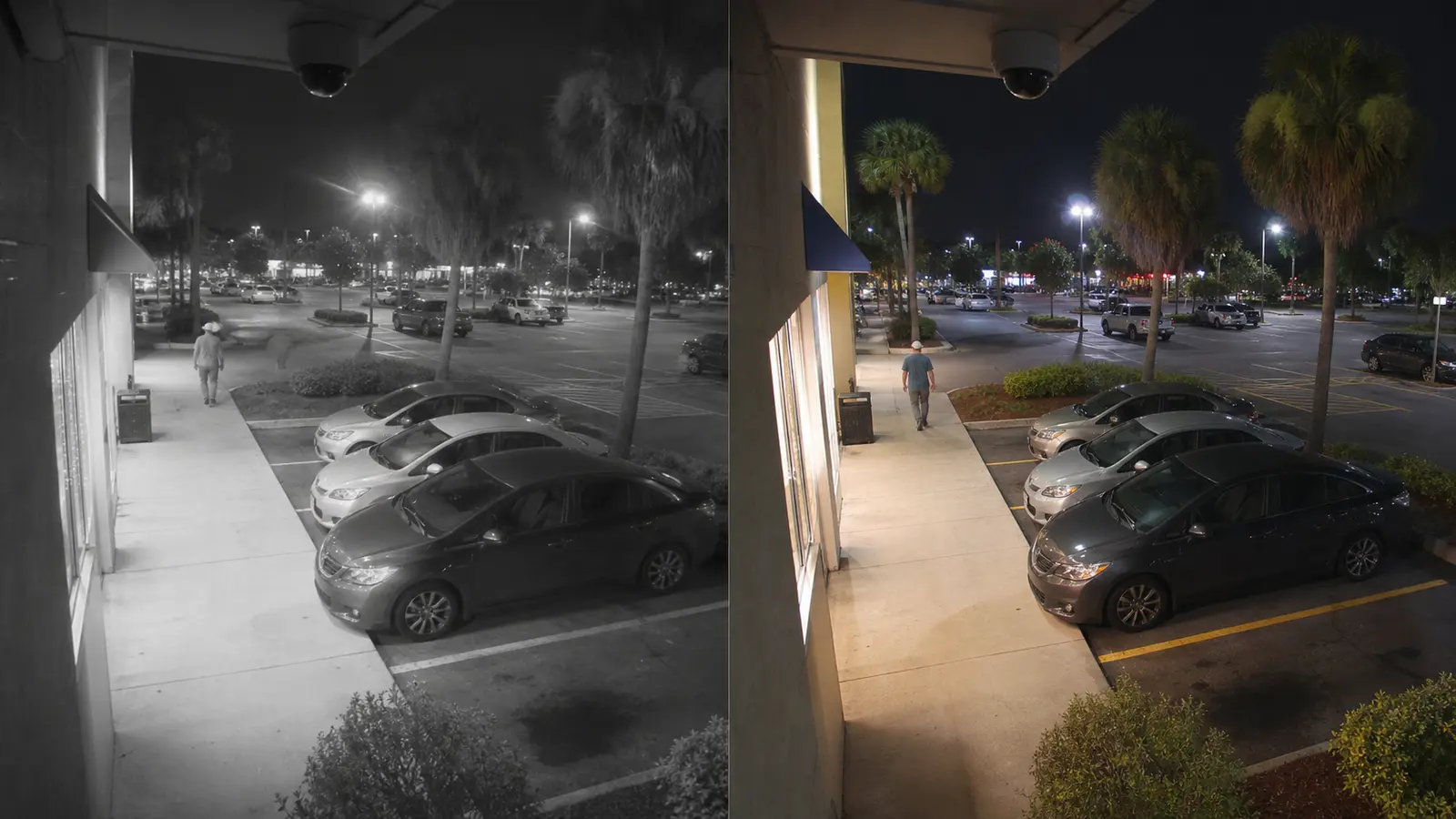
Same commercial parking area compared in monochrome and full-color low-light video

PLANNING GUIDE

Night Vision Camera Planning Priorities

Night Vision Camera Coverage: Planning

Define the coverage purpose, review goals and property constraints before choosing devices.

Night Vision Camera Coverage: Infrastructure Requirements

Confirm cabling, PoE, network, rack, UPS and storage requirements before installation.

Night Vision Camera Coverage: Configuration Requirements

Tune views, permissions, retention and alerts around how authorized users will review video.

Night Vision Camera Coverage: Lifecycle Planning

Document the system so future service, expansion and troubleshooting do not start from guesswork.

Tampa properties often deal with mixed nighttime lighting from signs, vehicle headlights, canopy lights, street lighting and reflective glass. Those conditions can make one entrance bright while the adjacent parking lane remains difficult to review.

Hospitality, retail and multifamily sites near busy corridors may need separate nighttime views for public entrances, outdoor seating, parking, package rooms and service areas.

Industrial yards and warehouse properties should treat dark perimeter sections, dock lighting and vehicle movement as separate night-coverage problems.

PLANNING PRIORITIES

Night Vision Camera Coverage Operational Recommendations

Review camera views after dark whenever possible, not only during daytime walkthroughs.

Avoid placing IR cameras behind glass or too close to reflective walls, signs or glossy surfaces.

Night Vision Camera Coverage Detailed Planning Guide

Night Vision Camera Coverage: Direct Answer

Night Vision Camera Coverage: Key Definitions

Night vision is the camera system's ability to produce usable footage in low light or darkness. It may rely on infrared illumination, visible white light, low-light sensors, supplemental lighting or a combination of those methods.

Night Vision Camera Coverage: How the System Works

At night, the camera balances available light, exposure time, gain, noise reduction and illumination. Infrared can help in dark scenes, but reflective surfaces, glass, license plates, rain and nearby walls can cause washout or glare.

Night Vision Camera Coverage: Core Components

infrared or white-light illumination

low-light sensor performance

lens aperture

WDR and exposure settings

mounting distance

weather-rated housings

recorder retention settings

Night Vision Camera Coverage: Planning Criteria

Walk the property after dark when possible.

Separate face-level doorway coverage from wide parking views.

Avoid aiming IR directly into glass, close walls or reflective signage.

Coordinate lighting changes with camera placement.

Night Vision Camera Coverage: Commercial Examples

A Ybor City restaurant may need entrance detail without overexposing patio lighting.

A Tampa industrial yard may require perimeter overview plus tighter gate views after closing.

A multifamily garage may need cameras at pedestrian doors, vehicle ramps and package areas with different lighting levels.

Night Vision Camera Coverage: Advantages and Limitations

Advantages:

more usable after-hours review

better support for gates, docks and parking areas

reduced blind spots caused by dark transitions

Limitations:

IR can reflect from glass and nearby walls

full-color night images may need visible light

headlights and wet pavement can overwhelm exposure

Night Vision Camera Coverage: Common Mistakes

assuming an IR distance rating equals usable identification distance

placing cameras behind glass for nighttime exterior views

ignoring how exterior lights, signs and headlights affect exposure

Night Vision Camera Coverage: Infrastructure Dependencies

power and PoE budget

weather-rated mounting

lighting control

network storage

permissions for after-hours review

Night Vision Camera Coverage: Decision Checklist

Which areas matter after dark?

Is color detail required?

Where will glare occur?

Can lighting be adjusted?

Does the recorder preserve enough nighttime detail?

Night Vision Camera Coverage: When to Request a Site Review

Request a site review when after-hours incidents, exterior glare, dark parking areas, reflective glass, dock lighting or camera placement could affect nighttime footage quality.
PROCESS

Night Vision Camera Coverage Project Process

Review the property at night or simulate the lighting condition

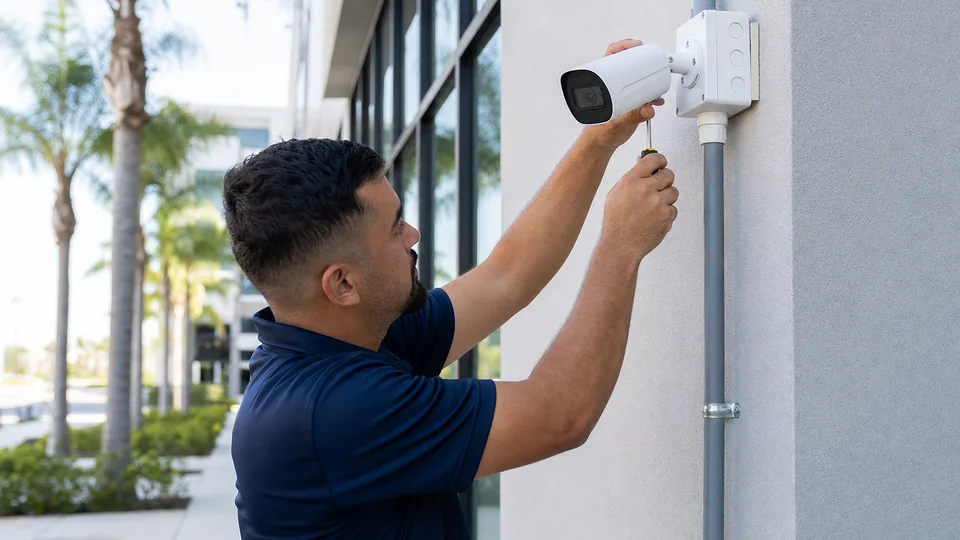
The team reviews the actual nighttime scene—or a controlled simulation—to document darkness, glare, motion, and available light.

Assign each camera a nighttime purpose

Each camera is assigned a nighttime purpose so overview, recognition, and identification expectations remain realistic.

Choose IR, low-light color or supplemental-light strategy

Infrared, low-light color, or supplemental lighting is selected according to scene distance, reflectivity, and required detail.

Confirm mounting, cabling, PoE and storage

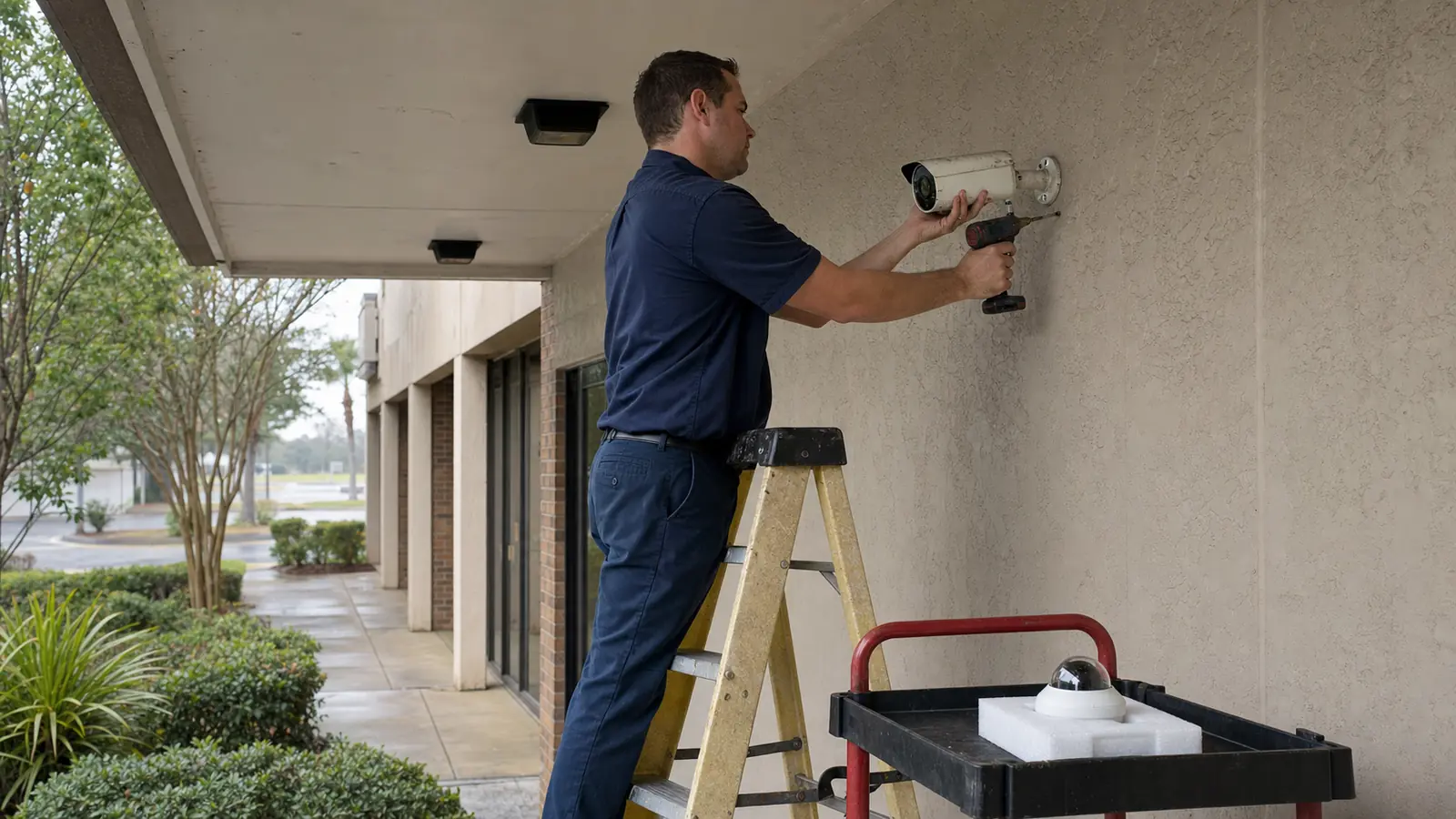
Mounting, weather protection, cable routes, PoE capacity, and recorder storage are confirmed before the night-vision equipment is installed.

Test after-dark footage before final sign-off

After-dark recordings are tested for motion clarity and usable detail before aim and image settings receive final approval.

FAQ

Night Vision Camera Coverage FAQs

Is infrared or full-color night vision better?

Neither is universally better. Infrared works well in dark scenes, while color night views usually need enough visible light to preserve color detail.

Can night vision cameras see through glass?

Exterior night views through glass often fail because IR reflects back into the lens. Exterior cameras should usually be mounted outside.

How far can night vision cameras see?

Usable distance depends on illumination, lens width, resolution, target size and glare. Published IR distance should be treated as a planning clue, not a guarantee.

Do Tampa parking lots need special night planning?

Yes. Headlights, wet pavement, open areas, landscape lighting and mixed commercial lighting can all affect camera placement and settings.

Will night vision cameras record in color?

Some cameras can record color in low light or with white light, but color quality depends on available light and scene movement.

Can existing exterior lights help camera performance?

Often yes, but light direction matters. Poorly aimed fixtures can create glare or deep shadows instead of better footage.

Do night cameras need more storage?

They can, especially when noise, motion or higher bit rates increase recording size. Storage should be sized from expected settings.

What areas should be prioritized after hours?

Common priorities include entrances, gates, parking, docks, trash enclosures, lobbies, package areas and exterior pedestrian paths.

Can night vision reduce false alerts?

Better lighting and analytics setup can reduce false alerts, but alerts still need scene tuning and appropriate detection zones.

When should we request a night site review?

Request one when the property has parking lots, exterior gates, dark corridors, reflective glass, signage, docks or after-hours operations.

NEXT STEP

Request a Site Review for Night Vision Camera Coverage

A practical night vision plan makes after-hours footage reviewable by matching camera type, lighting and placement to each scene.

Request a Site Review