TAMPA COMMERCIAL LOW-VOLTAGE GUIDE

Data and Voice Cabling System Planning in Tampa

A data and voice cabling system is the physical pathway that lets workstations, phones, access points, cameras, printers, POS devices and network equipment communicate reliably. The most important planning work happens before cables are pulled: endpoint counts, pathways, racks, patch panels, labels, testing and future bandwidth all need to be defined.

Data Pro Communications provides commercial low-voltage and security camera projects throughout Florida, including Tampa and surrounding areas. This guide is educational and supports planning decisions before a business requests a site survey.

Florida-Licensed Low-Voltage ContractorData Pro Communications operates under FL License #EC13016138 for qualifying low-voltage projects.
Commercial-First PlanningPlanning is written for businesses, managed properties, construction teams, IT teams and facility operators.
Infrastructure-Aware DesignRecommendations consider cabling, pathways, network equipment, recording, access permissions and support needs.
Documented System DeliveryProjects should include system documentation, configuration records, labels and user guidance.
Tampa Bay Service ContextContent reflects Tampa commercial districts, logistics sites, hospitality, healthcare, retail and managed-property needs.

DATA AND VOICE CABLING

Coordinating Data and Voice Cabling for Tampa Workplaces

This article focuses on the infrastructure behind business connectivity. It explains how commercial cabling supports endpoints, equipment rooms, voice services, Wi-Fi, security devices and IT serviceability without turning the article into a camera-only discussion.

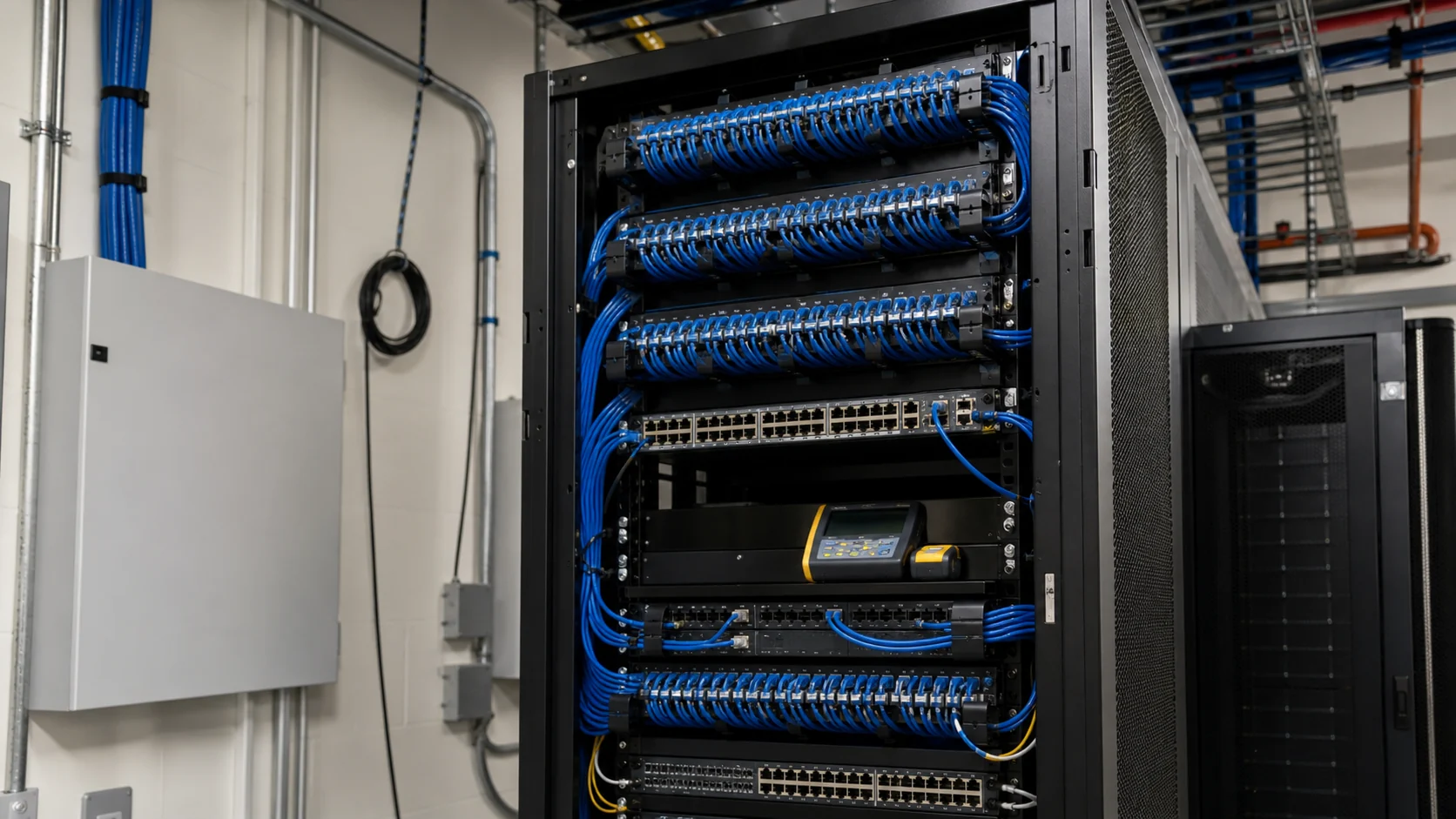
Organized Cat6 patch panels and network equipment supporting commercial data and voice connections

PLANNING GUIDE

Data and Voice Cabling Planning Priorities

How Structured Cabling Works

Copper and fiber links connect work areas, cameras, phones, wireless access points, and network equipment through documented pathways.

Data and Voice Cabling: Key Components

Cables, jacks, patch panels, racks, pathways, labels, grounding, test results, and records support reliable data and voice infrastructure.

Planning Criteria for Endpoints and Pathways

Count endpoints, confirm cable categories, distances, pathways, IDF locations, PoE needs, rack capacity, testing, and future growth.

Tampa Data and Voice Cabling Applications

Office workstations, wireless access points, phones, cameras, access control, warehouses, and tenant buildouts rely on organized cabling.

Data and Voice Cabling Detailed Planning Guide

Data and Voice Cabling: Direct Answer

Structured Connections for Data and Voice Endpoints

A data and voice cabling system is the structured copper and related pathway infrastructure that connects business endpoints to network equipment and communication services.

What Data and Voice Cabling Means

Data and Voice Cabling: Key Definition

Data Voice Cabling System in Tampa describes a planned commercial low-voltage scope with defined endpoints, pathways, equipment locations, support requirements and user expectations.

How Structured Cabling Works

How Data and Voice Cabling Works

Cables run from outlets and device locations back through pathways to patch panels, racks and switches. Labels and tests connect each physical cable to a usable port and service record.

Data and Voice Cabling: Core Components

Cable, Outlet, Patch Panel, and Rack Components

Key components include Cat6 cable, outlets, faceplates, patch panels, racks, ladder rack, conduit, sleeves, labels, test results and switch coordination.

Planning Criteria for Endpoints and Pathways

Data and Voice Cabling: Planning Criteria

Planning should define locations, distances, pathway conditions, equipment rooms, user needs, service access, testing expectations and future capacity before field work begins.

Commercial Use Cases for Data and Voice Cabling

Data and Voice Cabling: Commercial Examples

Practical Tampa examples include office workstations, medical exam rooms, hotel back offices, warehouse access points, retail POS and construction build-outs. Each example has different operating hours, access limits, pathway constraints and documentation needs.

Endpoint schedule

A strong data and voice cabling plan starts with an endpoint schedule that lists workstations, phones, printers, wireless access points, conference displays, POS terminals, cameras and specialty devices by room.

Pathway coordination

Cable routes must respect walls, sleeves, firestopping, ceiling access, conduit fill, furniture systems and equipment-room entry points. Pathways are often the difference between clean serviceable cabling and a messy patchwork.

Rack and patch-panel layout

A cabling system is not complete when cables reach the room. Patch panels, rack elevation, cable managers, switch positions and labeling standards determine whether IT can use the installation efficiently.

Testing expectations

Commercial cabling should be tested and labeled so owners can connect endpoints with confidence. Test records also help separate a cabling issue from a switch, device or configuration issue later.

Voice and data convergence

VoIP phones, softphones, paging adapters and conference-room systems often share network infrastructure. Voice planning should consider PoE, VLAN needs, desk locations and future furniture changes.

Warehouse coverage

In warehouse spaces, drops may need protection from lifts, racking changes, dust and long distances. Access point and camera cable routes should be planned with the operating layout, not only the nearest ceiling path.

Data and Voice Cabling: Advantages and Limitations

Data and Voice Cabling: Advantages

A planned system is easier to support, expand and troubleshoot because the design matches the property instead of forcing a generic package.

Data and Voice Cabling: Limitations

Limitations appear when existing pathways, power, rack space, hardware compatibility, budget or operating schedules constrain the final scope.

Data and Voice Cabling: Common Mistakes

Common Data and Voice Cabling Mistakes

Placing drops after furniture is installed, skipping labels, ignoring rack space, overfilling pathways and separating cabling plans from IT requirements are common mistakes.

Data and Voice Cabling: Infrastructure Dependencies

Pathway, Rack, Power, and Switch Dependencies

Cabling depends on pathway access, wall and ceiling conditions, equipment-room power, rack layout, switch ports, patching standards, endpoint locations and testing records.

Data and Voice Cabling: Decision Checklist

Data and Voice Cabling: Planning Checklist

Decision checklist: Count endpoints by room; Confirm rack and patch-panel space; Map pathways before walls close; Specify labels and tests; Coordinate IT and construction timing.

Data and Voice Cabling: When to Request a Site Review

When Data and Voice Cabling Needs Professional Review

A site review is appropriate for tenant build-outs, multi-room offices, warehouses, medical spaces, retail openings, remodels and any project with uncertain pathways.
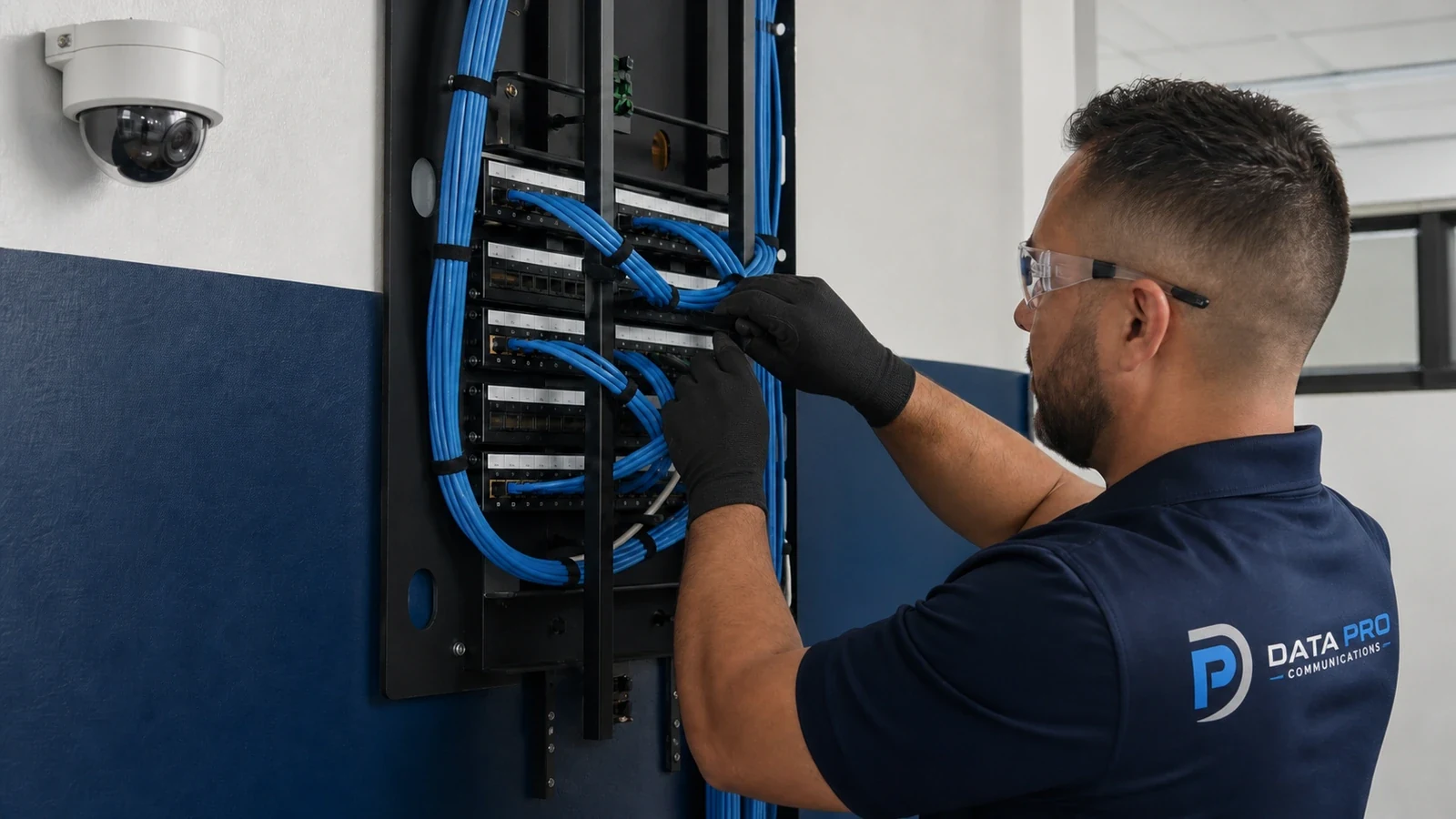
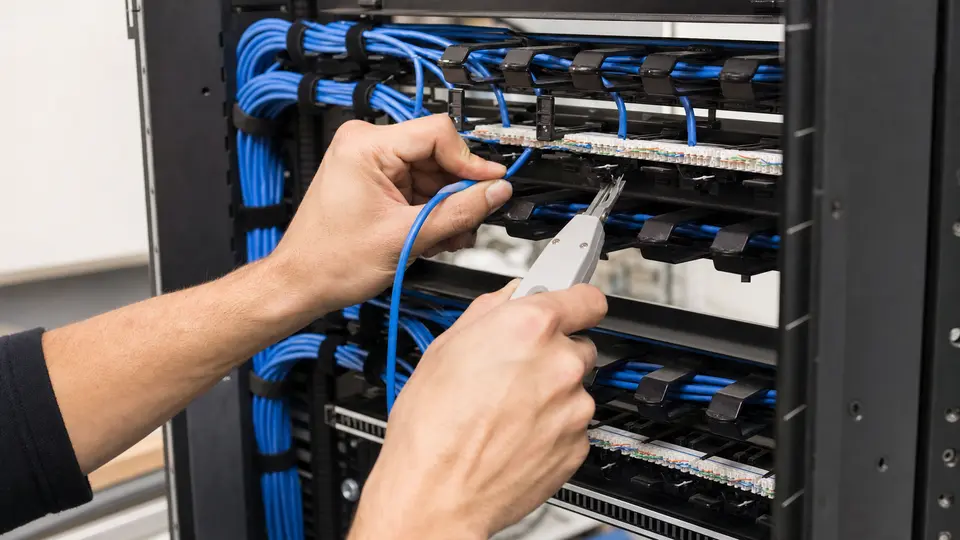
Data Voice Cabling System in Tampa planning detail for a Tampa commercial property

Data and voice cabling in Tampa commercial spaces supports the everyday endpoints a business depends on: workstations, phones, access points, printers, POS devices, conference rooms, cameras and network equipment. Planning should begin with endpoint locations and pathways, not just cable quantity.

Office build-outs, medical suites, retail openings, warehouses and hospitality spaces benefit from clean racks, labeled patch panels, tested drops and coordination with IT or construction teams. That foundation makes future moves, additions and troubleshooting much easier.

PROCESS

Data and Voice Cabling Project Process

Define Data and Voice Endpoints, Pathways, and Site Constraints

Confirm business goals, endpoints, property constraints and existing infrastructure.

Map Cable Routes, Telecom Spaces, Racks, and Power Dependencies

Map locations, pathways, equipment spaces, power and network dependencies.

Select Cabling, Termination, Labeling, and Testing Standards

Select materials, devices, configuration requirements and testing standards.

Install, Terminate, Label, and Test Data and Voice Cabling

Install, label, configure and test the approved scope.

Deliver Test Results, Cable Records, and Service Documentation

Provide system documentation, user guidance and service records.

FAQ

Data and Voice Cabling FAQs

What is included in a data and voice cabling system?

Data and voice cabling includes the copper pathways, jacks, patch panels, racks, labels, and test records that connect business endpoints with network and communication equipment.

When should data and voice cabling be planned?

It should be planned before walls close, ceilings are finished, equipment rooms are crowded or operational deadlines make changes expensive.

What information is needed to price data and voice cabling?

Useful information includes property type, floor plan, endpoint count, distances, pathways, rack locations, existing equipment and timing.

Can existing infrastructure be reused for data and voice cabling?

Sometimes, but condition, compatibility, labeling, distance, pathway exposure and testing should be reviewed first.

What can affect data and voice cabling reliability?

Common causes include weak pathways, poor labeling, insufficient power or switching, wrong equipment, missing records and untested links.

How does documentation support data and voice cabling?

Documentation helps owners, IT teams and service providers identify equipment, ports, routes, settings and support responsibilities.

Is data and voice cabling only for large properties?

No. Smaller commercial spaces can also need professional planning when business operations depend on reliable connectivity or video access.

Can data and voice cabling be completed in phases?

Often. Phasing can prioritize urgent endpoints or coverage areas while preserving a clean expansion path.

What should be included when data and voice cabling is complete?

The final package should include labels, test results or configuration notes, equipment locations, user guidance and service records.

When is a Tampa site review appropriate for data and voice cabling?

A Tampa cabling review is useful for tenant build-outs, multi-room offices, warehouses, medical suites, retail openings, remodels, and any project where pathways or equipment-room capacity remain uncertain.

NEXT STEP

Plan Data and Voice Cabling for Your Property

Request a commercial site review when the property needs a practical plan, clear infrastructure assumptions, and a documented path to implementation.

Request a Site Survey